

UVSS forms new working group to consult with a UVic Senate Committee, following year-and-a-half-long push for improved accommodations
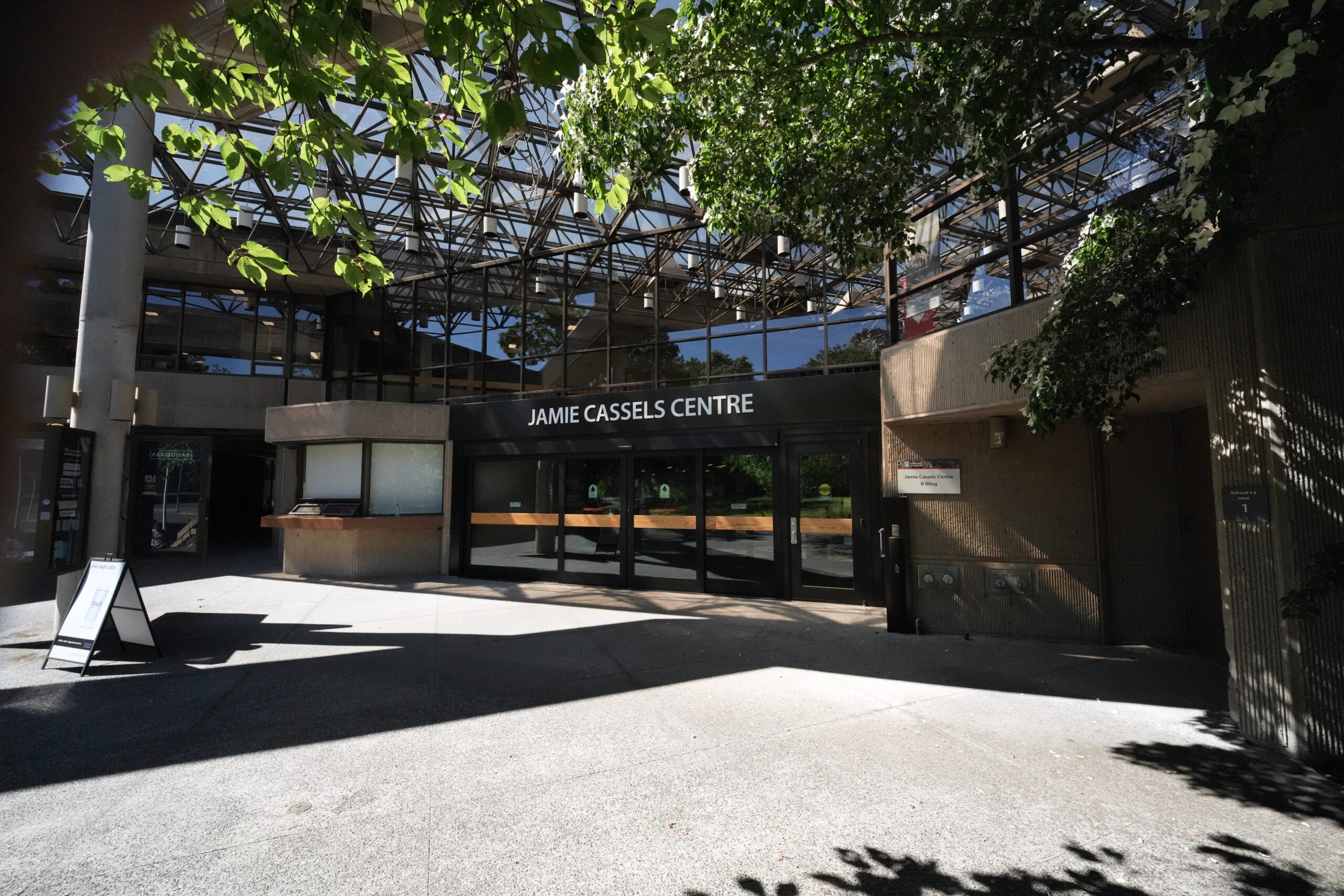
Photo by Declan Snowden.
Despite university efforts to improve accessibility and accommodations, some students remain concerned over the implementation of accessibility measures, including extended time for examinations and UVic’s new Centre for Accommodated Assessments.
Evan Maher, a director-at-large for the UVSS who also serves on the Senate, has been pushing for improved CAL accommodations through Senate for a year and a half.
Currently, the university offers an array of accommodations for students with disabilities, as well as utilizing “Universal Extended Time” (UET), which grants additional time for all students, not just those with disabilities or accommodations, when taking examinations.
As of 2025, roughly 20 per cent of UVic students are registered through the Centre for Accessible Learning (CAL), though UET is not used in every class at UVic. According to the university’s accommodated assessments page, “one sixth of in-term [exam invigilation] requests include it.”
Maher said he was prompted to push for improvements to CAL accommodations following concerns he heard from students that UET wasn’t meeting their needs.
In an interview with the Martlet, Maher expressed concerns that professors will sometimes not calculate the time needed for an exam properly, resulting in the extended time not being adequate either.
Because the time may be calculated incorrectly, he said, the extended time may also be inadequate for students who need additional time.
“The challenge [is], if you’re not actually meeting the students’ needs, or what they are entitled too, then that’s discriminating against students,” he said.
“One of the challenges behind it is, there’s not really clear guidelines as to how to actually measure the universal extended time … and that’s really the university’s fault. You can’t expect a professor to be an expert in this area and to perfectly measure an exam time,” Maher said.
According to UVic’s Teach Anywhere webpage, UET seeks to “reduce access barriers created by time restricted assessments and increase overall accessibility for all students.” The page says that UET does not “‘solve’ all extended time accommodations” and that it may “meet some students’ extended time accommodations but should not be used as a blanket strategy.”
The page also has a checklist for instructors to help assess and implement UET. The checklist includes reviewing and measuring the time of the assessment thoroughly by accounting for the time it takes to review instructions, read questions, answer questions, edit answers, use metacognitive strategies, and take breaks.
The checklist also involves consulting with UVic’s Learning and Teaching Support and Innovation (LTSI), assessing past data on the assessment, or having colleagues review and audit the assessment, among other considerations.
Still, concerns over UET persist.
Hannah Brown, the operations director for the UVic Society for Students with a Disability (SSD), told the Martlet that UET is good in the sense that it allows accessibility for those who may not have individualized accommodations, but cautioned that it needs to be implemented in a way that is fair to everyone, and does not replace individual accommodations.
Brown said that although they had not personally heard concerns directly from students around UET, there’s anxiety around how professors will determine how long an examination takes, and if the extended time would be adequate.
Maher suggested a few possible solutions, including designing exams for neurotypical students, and then granting neurodivergent students and those with accommodations additional time, designing exams with extra time granted for everyone, and granting additional time for students with accommodations on top of that, and granting a significant amount of additional time, such as 10 hours, though Maher acknowledges there are resource constraints to consider with that option.
According to UVic, UET can “enhance accessibility in assessment design” and “research shows it supports a diverse range of learners, not just those who have extended time as an accommodation.”
In 2024, the university did a pilot program to test universal learning principles, including UET. The pilot program was largely considered a failure by students and faculty, with the UVic Faculty Association, Professional Employees Association, Canadian Union of Public Employees (CUPE) Local 4163 and 951, SSD, UVSS, and UVic Graduate Student Society (among others) undersigning a letter expressing concerns with the university’s approach.
Brown cautioned people to be mindful that UET and individualized accommodations are separate things — with UET being a tool to improve overall accessibility and accommodations to help those with disabilities have an “equal footing to their peers” — and that one cannot replace the other.
At the June 8 UVSS Board of Directors meeting, Maher gave a presentation discussing UET, and said that the Senate Committee on Learning and Teaching wanted to consult with the UVSS. The UVSS then formed a working group to act as the consulting body.
“I wrote a proposal to Senate to do something about [UET] and it’s been discussed in the committee for a year and a half, and so that’s where we are at now. I can’t go into too many specifics around what the committee is doing, but I can say that they do want to consult with us, the UVSS,” Maher said during his presentation.
The Martlet asked the university if the Senate Committee on Learning and Teaching had any plans to consult the UVSS over UET, or anything else.
A UVic spokesperson said in a written statement that “the Senate Committee on Learning and Teaching has not yet established a communications plan regarding any academic regulations related to Universal Extended Time,” at this time, and that it would be “premature to discuss the matter further.”
Beyond UET, Brown also said they had concerns about the Centre for Accommodated Assessments, which was announced at the end of January.
Expected to open in 2027, the new centre aims to improve “access-centred teaching and assessment practices” and “strengthen coordination and administrative efficiencies,” and would be operated by the Office of the Registrar and Enrolment Management (OREM).
The centre will be housed on the bottom floor of the Mearns Centre for Learning – McPherson Library.
“The university is planning to open a centralized accommodation assessment center … which is an idea that I as a disabled student fully support. However, I think the issue is around the implementation itself,” Brown said.
“There’s been no consultation with the Society for Students with a Disability or such groups to find out what students actually want from such an assessment centre.”
On June 11, Elizabeth Croft, vice-president academic and provost, said in a statement that OREM and Facilities Management consulted with stakeholders.
A university spokesperson told the Martlet that the consultation was “consistent with the university’s approach to renovation (and space allocation) projects … [and was] focused on the operational requirements of the space and on those who are responsible for delivering accommodated-assessment services.”
They said accessibility was a key consideration in the design process.
According to the university, the project does not involve “changes to institutional accommodation approaches or processes.”