

The decision, which takes effect in January 2027, is ‘disappointing’ and leaves young Ukrainian students with fewer options, says the president of UVic’s Ukrainian Students Society
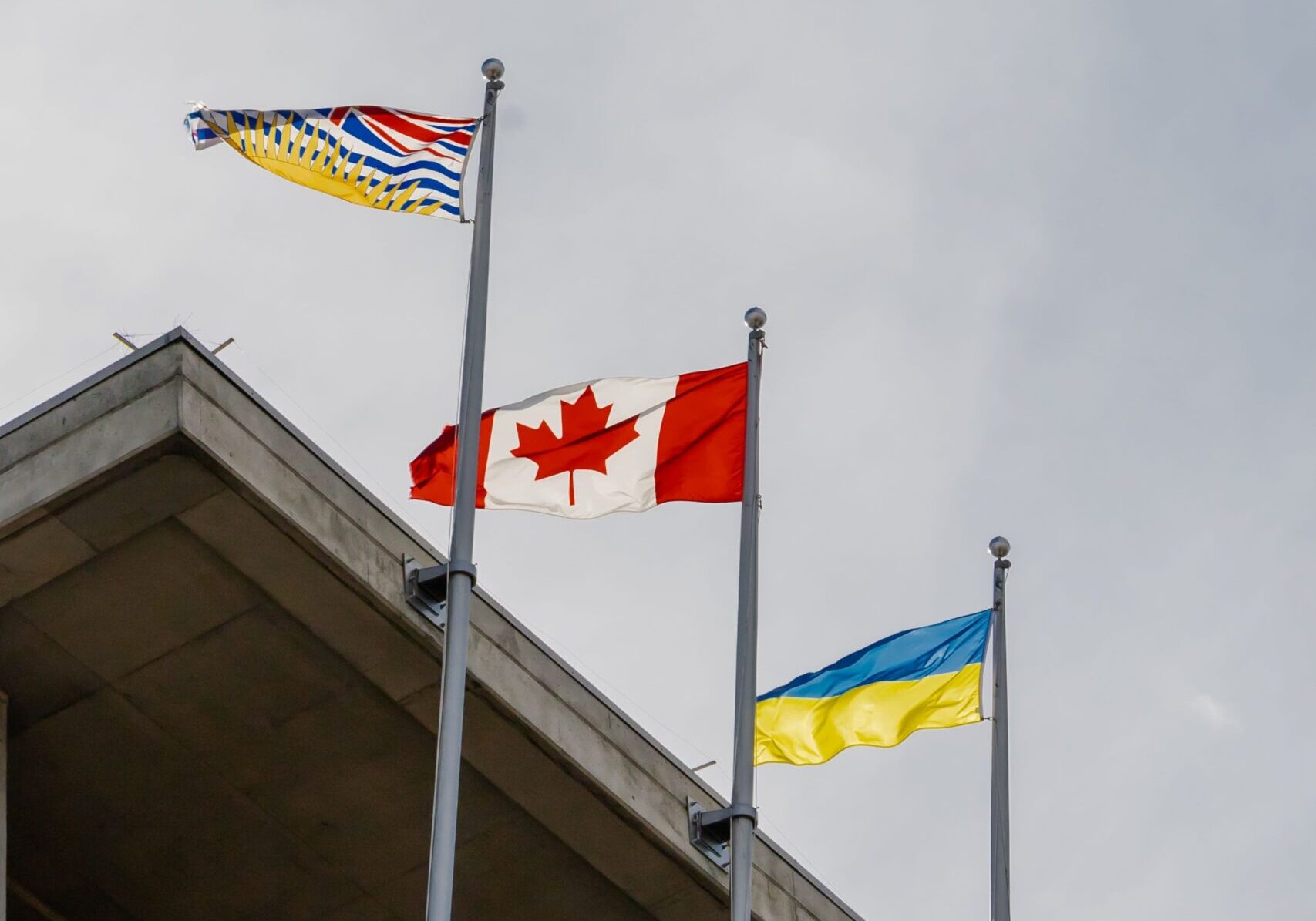
Photo by Jona via pexels.com.
Ukrainian students with a valid Canada-Ukraine Authorization for Emergency Travel (CUAET) who begin their studies at UVic in January 2027 or later will no longer be eligible to pay domestic tuition — a practice UVic, among other post-secondary institutions in Canada, have been offering since Russia’s invasion of Ukraine in 2022.
However, incoming Ukrainian students with a CUAET who began their studies before January 2027 — including those beginning their studies this month — remain eligible for domestic tuition fees for the duration of their program of study at UVic.
“I’m really sad that they decided to cancel it,” said Lyza Shymko, a third-year political science student from Ukraine, who came to UVic in part because of the domestic tuition offer for CUAET holders. Shymko serves as president of the UVic Ukrainian Students’ Society (UVicUSS) and is also on the board of directors of the Ukrainian Canadian Students’ Union (SUSK).
The CUAET was a special measure introduced by the Canadian government in 2022 following the Russian invasion of Ukraine. It allowed Ukrainian nationals and their family members to stay in Canada for three years, instead of the standard six months for regular visitors/temporary residents.
It also allowed CUAET holders to apply free of charge for an open work permit, and granted Ukrainians and their family members who already had temporary resident status the ability to extend their stay for up to three years, renew work and study permits for free, and attend primary and secondary school in Canada, among others.
While new students are not coming from Ukraine to Canada through the CUAET program, many secondary school-aged students who fled Russia’s invasion with their family members are now graduating from Canadian secondary schools, and may be looking to continue their studies in the country.
“A lot of people who immigrated because of war were in their teens or preteens, and now it’s time for them to go to university … they went through Canadian middle school and high school. They’re really accustomed to Canada, right?” Shymko said
“It would be hard to go back to Ukraine to go to university, and a lot of people don’t have a place to go back to…. So, what are they gonna do?”
Shymko said many Canadians don’t understand the unique circumstances experienced Ukrainians here via the CUAET.
“Not many people associate Ukrainians with the standard definition of a refugee…. They don’t understand that we don’t have refugee status, but we’re not standard immigrants…. You’re somewhere in between an immigrant and a refugee, but you don’t get the benefits of either,” Shymko said, referencing scholarship and other financial aid opportunities specifically set aside for refugees or international students here via a student visa.
Shymko said the majority of Ukrainians here via the CUAET can’t afford the high international student tuition fees. “The majority of my friends [are] … really counting on the domestic tuition.”
“To pay for the international tuition in Canada, you have to be a millionaire in Ukraine, and not many people are, especially right now.”
The Ministry of Post-Secondary Education and Future Skills confirmed in a statement to the Martlet that the province asked post-secondary institutions to allow CUAET-holders to pay domestic tuition in 2022, but said the decision has always been at the discretion of individual institutions.
“UVic is currently one of the only B.C. public universities continuing to assess domestic fees for eligible CUAET work-permit holders. Most institutions transitioned away from this practice more than two years ago,” a UVic spokesperson said in an emailed statement.
Several Canadian universities, such as the University of Alberta, the University of Manitoba, Douglas College, and Camosun College still offer domestic tuition rates to Ukrainian students with a CUAET. All post-secondary institutions in Saskatchewan offer domestic tuition rates to CUAET holders as part of a provincial government program, which was renewed until 2030 earlier this year.
B.C., unlike Saskatchewan, does not subsidize the cost of tuition for CUAET-holding students.
UBC offers domestic tuition to students with refugee status, but Ukrainians who arrived in Canada via the CUAET program are not classified as refugees. The last Ukrainian students at UBC to pay domestic tuition following the province’s request began their studies in September 2023, as per CBC.
The University of Toronto also recently ended its policy of allowing Ukrainian students to pay domestic tuition.
Shymko said that on the board of SUSK, and when speaking to younger members of the Ukrainian community, she would often mention how incredible it was that Ukrainian students still had this option at UVic.
She said she was glad UVic supported this option for Ukrainian students as long as they did, but was disappointed by the decision to cancel it starting in 2027.
The spokesperson said UVic’s decision is intended to align the university’s practice with those of other universities in Canada, which initially offered domestic tuition for Ukrainian students but have since ceased to do so.
“The B.C. government does not provide funding for international students as it does for domestic students, so international students pay for the full cost of their education. This is why there is a discrepancy between the cost of domestic versus international tuition,” said UVic’s spokesperson.
Applications closed for the CUAET in July 2023, however, special measures were changed by the Canadian government in April 2026, allowing the option to extend open work permits granted to Ukrainian nationals under previous Canadian government policies like the CUAET program. The deadline to apply for this is March 31, 2027.