
Salopek shared his insights from his travels and about climate and migration at UVic on Oct. 25
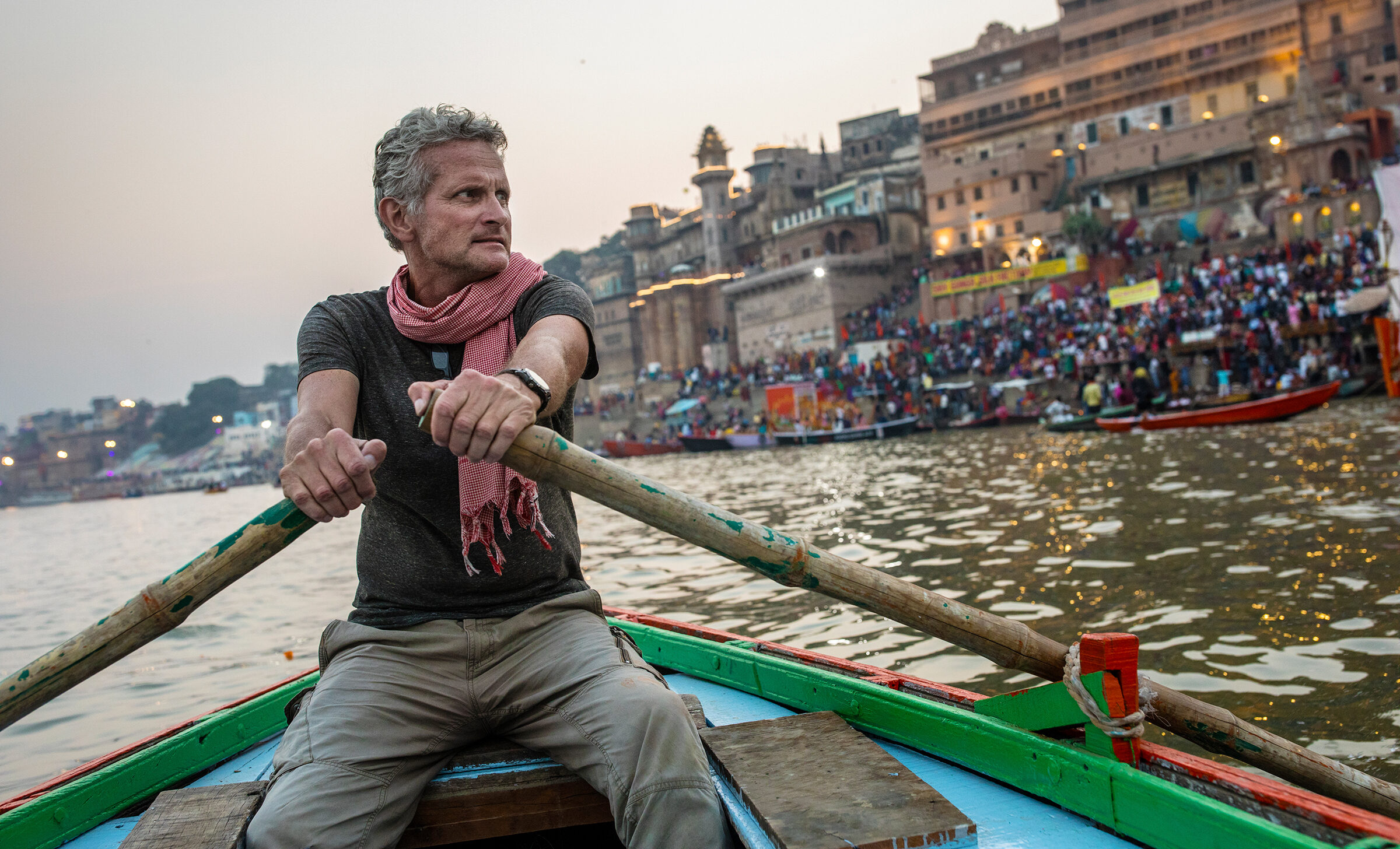
Photo by John Stanmeyer.
Paul Salopek, a National Geographic Explorer and Pulitzer Prize-winning journalist, started walking around the globe in 2013, and arrived in Victoria this October.
In an interview with the Martlet, Salopek described the journey he is taking, the Out of Eden Walk, as “a storytelling walk across continents, following the footsteps of the first Homosapiens who spread out of Africa back in the Pleistocene.”
Throughout the walk, Salopek writes and takes videos, photos, and recordings to document his findings. By June 2025, he had written more than half a million words online about it.
For part of his journey, he will be accompanied by his walking partner, Deddeda White, a Vancouver Island local, as he makes his way toward the tip of South America.
The Out of Eden Walk was motivated by a “deep interest in other people.” During the walk, Salopek practices “slow journalism,” an alternative form of journalism that embraces “depth, full context, and human connection.” He moves through communities on foot with an open mind — without forcing a predetermined agenda — to let broader human patterns emerge organically.
“I don’t know what’s going to happen ahead, today or tomorrow,” he said. “But I might bump into something that … catches my interest, and that turns into a story.”
In a presentation at Cinecenta last month, Salopek described how, while a foreign correspondent for the Chicago Tribune in Africa, he covered war and conflict but felt he was missing important stories. Slow journalism allows him to investigate people’s everyday realities, not just search for headlines.
During the presentation, he shared a clip of his walking partner walking backward to alleviate the strain on his knees during a journey through China. Salopek compared the moment to the Out of Eden Walk as a whole — he does not know the landscape, or exactly what he will find as he walks, and relies on chance.
Two key themes that have emerged in Salopek’s journey are climate and migration. “I bump into [these issues], and I stub my toe on them every single day,” he said in the interview.
He noted that everywhere he travels, someone comments on the weather. From Japan, where hotter temperatures are stunting rice crops vital to the local diet, to British Columbia, where rising ocean temperatures are harming oysters — with harm to marine life likely to worsen with this year’s El Niño — the climate emergency is driving severe regional impacts worldwide.
In his presentation, he illustrated how climate change manifests in unexpected ways, using the Himalayan Mountains as an example. While accelerated glacier melt has temporarily boosted water flow and benefited local farming, this resource is finite. As these glaciers disappear, the region will soon face severe water scarcity and hardship.
Salopek situated himself as a privileged person with resources, choosing to walk across the world during an age of migration where people must move to live.
Through the Out of Eden walk and his career in journalism, he has witnessed how war, conflict, and climate have uprooted people from their homes, and how involuntary migration has changed communities.
Salopek continues to explore in his travels why we walk and keep moving. He noted humans were originally nomadic people, and still have that instinct.
“Where to find work, to be safe … you have to vote with your feet. And this has been a human survival mechanism, a coping mechanism, from the very beginning going back 300 000 years,” he said.
“We’ve sort of forgotten about it since we invented agriculture just 11 000 years ago, and that rooted us to place. But the world’s changing so rapidly now that we might have to dust off these ideas and incorporate them into our lives once again.”
In the question-and-answer portion of the presentation, Salopek named home as wherever he can form a connection with people. He said that while he is a nomad, it is always difficult to say goodbye to the people he meets along the way.
“If someone carries away anything from all this work, I would say it’s just a gentle reminder that you live in the world, and the world belongs to you. And therefore, don’t be afraid of it. Go out and stake your claim to it in a way that invites connectivity to others. That invites human connection,” he said.