
Why do people call themselves ‘so autistic’ when they’re nothing of the sort?
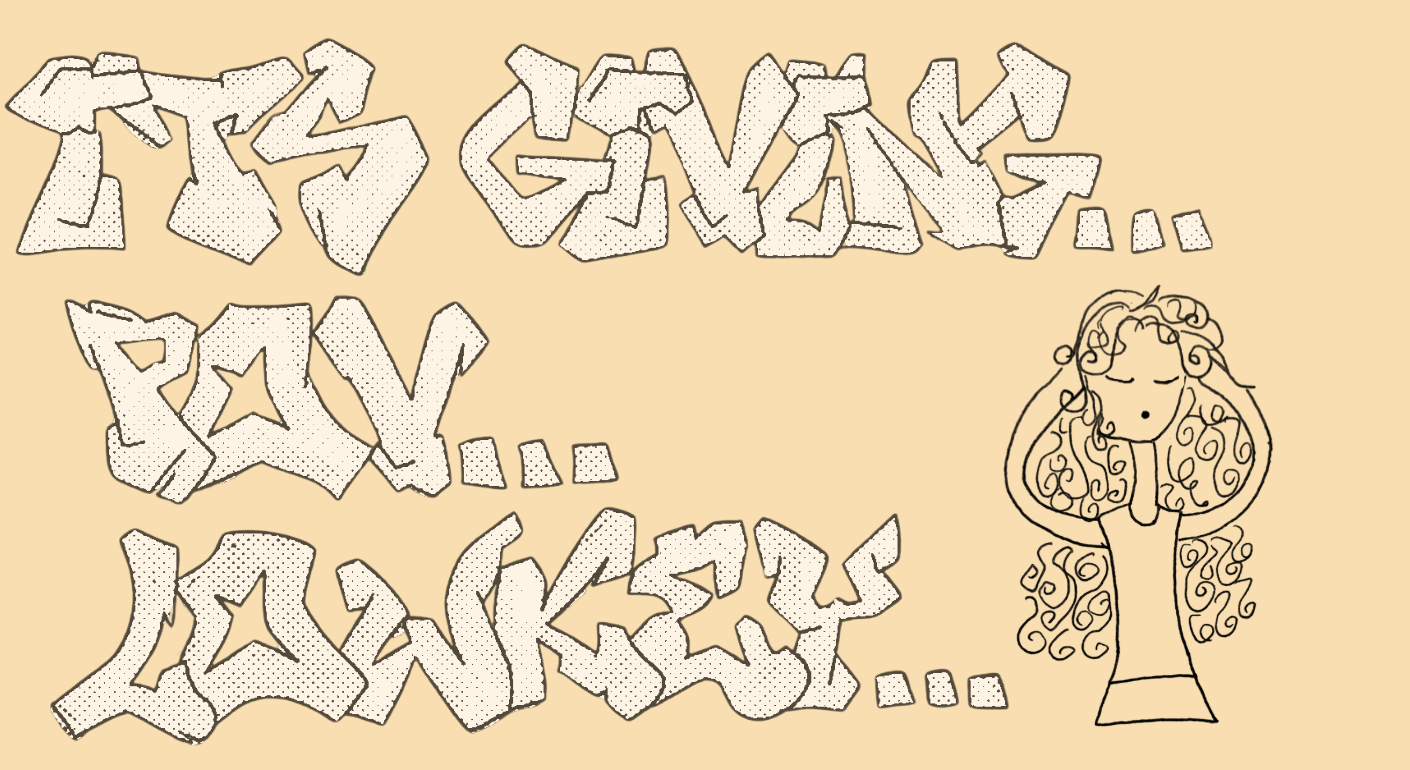
Illustration by Sabina Mendoza.
To this day, I am still unsure of whether TikTok’s contributions to changing colloquial language are more dangerous or marvelous. That short-form video social media applications contributed to Dictionary.com naming “demure” their word of 2024, “6-7” their word of 2025, and now “maxxing” as the word of 2026 is mind-blowing.
Language sets up the parameters of our relationships. It allows us to construct bridges of understanding, or burn them.
So, what happens when misinformation spread on TikTok causes people to say they’re “so autistic” about something? Or that they’re “a bit ADHD” because they like to bounce from topic to topic. How about when someone says they’re “hyperfixated” on something, but they don’t mean it in the functionally disabling kind? What power do these statements hold?
The Mental Health Commission of Canada defines a neurodivergent person as someone “whose neurological development and functioning differ from what is considered typical.” Neurodiverse-affirming language is an ongoing endeavour to identify and treat certain symptoms. Neurodivergence does not necessarily entail a disability, but it certainly does disable a person in some capacity. For example, Canada recognizes ADHD, a form of neurodivergence, as a disability.
As research about different forms of neurodivergence (autism, ADHD, schizophrenia, or tourette syndrome, for example) continues to grow in volume, conversations surrounding neurodivergence are bound to be more dynamic.
But, does it have to come in the form of watering down (often) disabling conditions into quirky identifiers?
Unfortunately, there is nothing stronger than the combination of the decline of media literacy paired with the insatiable greed of the mega-rich to make ignorance profitable. Healthline released an article in 2024 discussing the dangers of misdiagnosis aided by TikTok. In it, experts warn of possible detrimental effects from relying on misinformation to diagnose observed behaviours as something they most likely aren’t.
The use of medical terminology by non-medical professionals to “diagnose” others can lead to actual diagnoses being downplayed due to a misinformed understanding of their nature.
I don’t speak for every neurodivergent person — maybe just the angry ones — but I find it demoralizing whenever I encounter a person adopting neurodivergence whenever they choose, slipping it on like a mask for some laughs and relatability points.
The terms and conditions of my neurodivergency make it so that I try to peel off my skin in hopes of alleviating my stressed, overstimulated sense receptors. Executing basic tasks feels like splitting a boulder with my bare hands. I had to learn the hard way that life operates against my innate workings.
How do I cope? I hyperfixate. I develop extremely intense, often detrimental obsessions on certain things – be it a TV show, movie character, pop musician (Kate Bush, I love you) – and it replaces my reality. Developing a hyperfixation, for me, is akin to comfortably drowning in a pit of quicksand made up of all my earthly desires and watching as life passes me by. I am, in other words, disabled by it.
The language I use to navigate the arduous world of my neurodivergency becomes watered down when people ignorantly try to equate certain words together. Suddenly, people misunderstand the disabling effects of a specific hyperfixation to just be something I’m really passionate about. That awkwardness you experience in an interaction with a person you can’t read? Must be autism!
Neurodiverse language is imbued with helpful frameworks intended to identify how a neurodivergent person might struggle navigating a neurotypical world. When that language is taken out of the mouths of medical professionals and widely appropriated by misinformed people, my chances of getting the help I need dwindle to zero.