
After the International Olympic Committee announced transgender women would not be allowed to compete in womens categories, Dr. Joanna Harper gave a talk on the nuanced science surrounding transgender athleticism
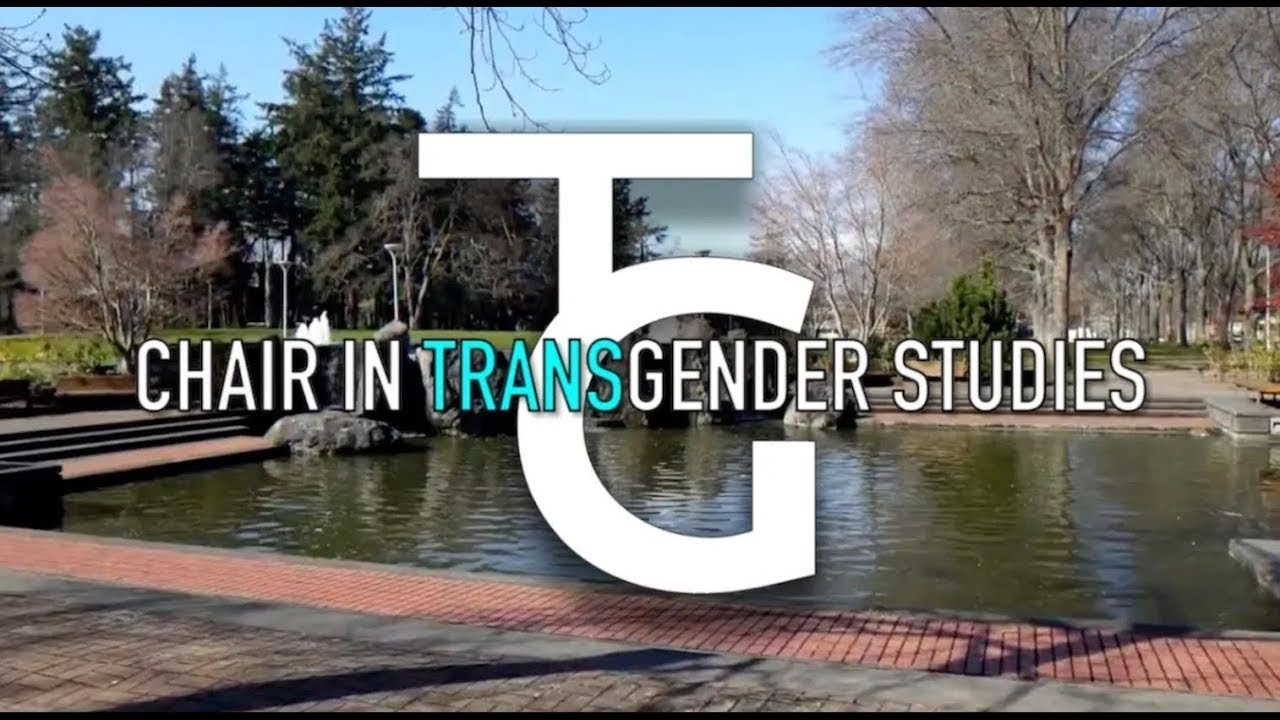
Photo via the Chair in Transgender Studies.
On April 21, Dr. Joanna Harper gave a lecture at UVic about the science surrounding transgender athletes. Harper discussed the complexities of biological sex, the effects of hormones on athletes’ performance, and policies on restrictions against transgender and intersex athletes in sports.
Her lecture came in the wake of the International Olympic Committee’s (IOC) announcement in March that it will ban transgender athletes from competing in women’s events.
Harper is the author of Sporting Gender: The History, Science, and Stories of Transgender and Intersex Athletes and completed a PhD in exercise science at Loughborough University.
Harper said her 2015 study on race times for trans runners was the first of its kind and that “there’s only six published papers that look directly at the performance of transgender athletes.”
She was working on a study in early 2024 on athletic performance in trans youth, but said the project lost funding due to political backlash.
Harper said that anti-queer groups have poured hundreds of millions of dollars into this fight.
“Until 2015, the focus of these groups was to stop same-sex marriage laws,” she said. “It was a battle that they lost. But they didn’t decide that they suddenly like queer people, and they didn’t stop fundraising, so they needed a new target.”
“At the Olympic Games, even the smallest margins can be the difference between victory and defeat,” Coventry, a two-time Olympic gold medalist in swimming, said in a statement to CBC, adding it “would not be fair” for transgender women to compete in the female category.
Harper said Coventry justified the ban based on scientific reasoning that does not account for the changes to athletes physiology after hormone replacement therapy.
Harper was on a previous IOC policy committee in 2016, she said, but was not given the opportunity again.
“They assembled a secret group of experts, and I was not in the group this time. And in 2026 they’ve announced that they’re moving to a chromosome based policy, very similar to what was initiated in 1968 and [then later abandoned],” she said.
Harper said that previous policies on transgender athletes, such as the polices implemented in 2016 and and 2021 respectively, have lasted around five years and have changed dramatically. “But physical diversity isn’t going away,” she said, “it’s not going anywhere.”
Following leadership changes in the IOC presidency and its medical commission, Harper recognized a shift in policy would happen.
“It was very very clear that this whole effort was put together to lead to the conclusion that clearly the president of the IOC and apparently the medical director as well, wanted to see.… They had a goal going in and they put together a process that helped them achieve the goal, rather than listening to a broad spectrum of ideas,” she said.
Harper said she recognizes that there are reasons for sports to be divided into male and female categories. “Anyone who experiences a masculinizing puberty gains very substantial advantages over anyone who doesn’t,” she said. “But not everyone who experiences a masculinizing puberty is 100 per cent male.”
“What these studies don’t look at is what happens after trans women go on hormone therapy, where they suppress testosterone and add estrogen,”Harper said.
Opponents of transgender inclusion in sports often claim that trans women perform like men, and because men outperform women, trans women should not be allowed to compete against cisgender women.
However, in her lecture, Harper discussed studies comparing transgender women to cisgender male and cisgender female athletes, arguing that any advantages trans women have are insufficient to justify a ban against trans athletes.
These studies included measurements of hand grip strength, counter movement jump, and aerobic capacity.
Each of the studies, Harper said, found that there was little to no difference in the data taken from trans women and cis women.
Harper noted the difference between absolute and relative measures of strength. Absolute measures are looking at the force that an athlete’s body can exert regardless of their size, whereas relative measures examine the athlete’s strength compared to their body size.
“One of the things that we found consistently was that trans women outperformed the cis women in terms of absolute measures, but not in relative measures.”
There are also areas where trans women athletes are at a disadvantage to cis women athletes, Harper said. “Their larger frames are now being powered by reduced muscle mass and reduced aerobic capacity, and that can lead to disadvantages in things like fitness, endurance, and recovery.”
She also noted the psychosocial disadvantages they have in sports, such as facing discrimination and mental health challenges, which Harper said are no less important than physical differences.
Even when trans women do possess an advantage over cis women, trans women do not perform athletically the same as men. “The data suggests that the strict advantage that trans women have … is about one third as large as the advantage that cis men have over cis women in hand grip strength,” Harper said.
Harper said that over 14 exercise studies showed no difference in relative measures. Although trans women do have an advantage over cisgender women in the absolute measures, the difference in cisgender men’s performance remains “substantial,” with cisgender men significantly outperforming trans women, and trans women’s performance being much closer to cisgender women than cisgender men.
“One area where trans women do differ from cis women is anthropometry. Trans women are taller and more massive. And in some sports, just being bigger is an advantage,” Harper said. Anthropometry is the measurements of the human body.
Harper acknowledged in some sports where height, mass, and size are important, being larger on average could provide an advantage, but in other sports like gymnastics and marathon running, it can be a disadvantage.
Furthermore, she argued that advantages are allowed in sports beyond those related to gender.
“There are many sports in which left-handed athletes have advantages over right handed athletes. The most notable is baseball, where 30 per cent of major league baseball players are left-handed.”
“What we don’t allow is overwhelming advantage in sport,” Harper continued, citing size differences in martial arts.
“The difference between the two sports is that, even though left handed players have advantages, we could still have meaningful competition between left handed and right handed baseball players. There’s no meaningful competition between big boxers and little boxers. And so the question isn’t ‘do trans women have advantages?,’ but ‘can we have meaningful competition between trans women and cis women?’”
The data Harper presented in her lecture supports the argument that trans women do not perform like cis men. However, Harper said, the data is not conclusive due to a lack of research.
“There is a substantial push to not fund studies on this topic, and so, where will future data come from?,” she asks.
Despite that worrying question, Harper remains hopeful for the future of this research within Canada.
“There are numerous questions about future research, but I am determined that this is necessary and I think we can make it happen.”