
This ‘global learning hub’ has been supporting English language learning for 50+ years
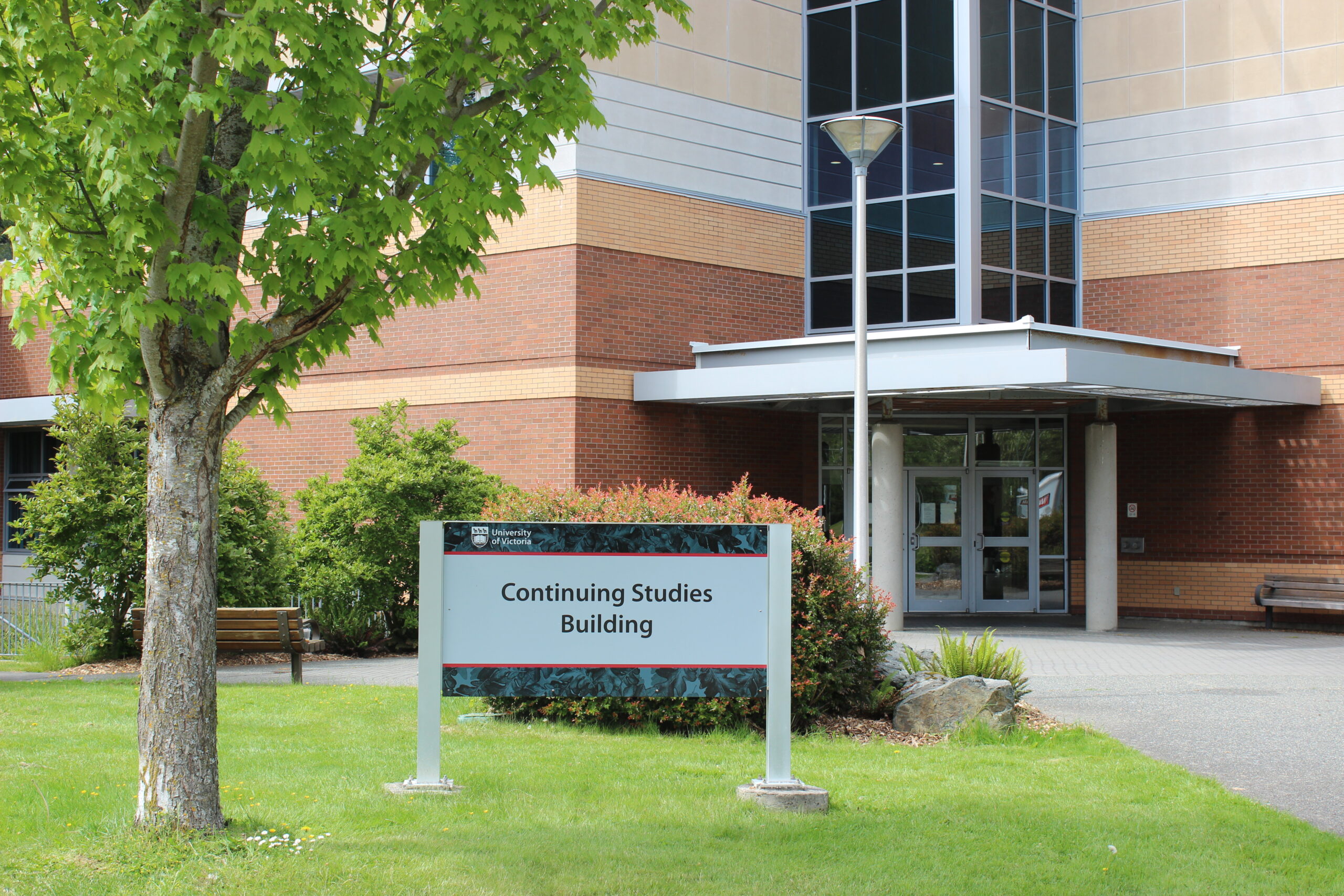
Photo by Kiera Clark.
In 1970, UVic opened the English Language Centre (ELC) as a program area in the linguistics department. For over 50 years, the ELC has been supporting students with their English language learning, and is now one of the largest on-campus English language schools in Canada. With programs ranging from one to 12 months, students from over 30 countries globally participate in on-campus and virtual programs each year.
This year, the ELC celebrated their tenth anniversary in the expanded Continuing Studies Building.
Dr. Jo-Anne Clarke, Dean of the Division of Continuing Studies, explained in an interview with the Martlet that the building’s design makes the centre a “hub of activity.”
“What we want is for students and others to feel like a community … [that] there’s a place where they feel safe and comfortable, and they can hang out with their friends and continue to meet new friends,” she said.
Clarke explained that the majority of students come to the ELC for one- to three-month programs.
“They’re mostly university students at institutions across the world who are coming here to learn English intensely, and they will get credit for that back in their home institutions.”
For Clarke, the ELC is a “global learning hub” for international students. But their learning goes beyond just language. Clarke said she has also observed a noticeable improvement in their confidence.
Students are drawn to the ELC for many reasons, from program requirements to personal goals.
Yoh Fujii, a student from Japan, chose the ELC after visiting Vancouver a few years ago. “I really liked Canada and studying abroad was the number one dream for me … but Vancouver [is a] big city and I don’t really like [that] because I was raised in the countryside,” she said in an interview with the Martlet.
Fujii said she chose Victoria after hearing that it was a beautiful city with a lot of nature.
For Shuta Harada, also visiting from Japan, an international English program was part of his English literature degree, and UVic is one of the partner universities available. Like Fujii, Harada was drawn to Victoria for its nature. He said he has enjoyed learning English in Victoria, especially being able to engage with so many native English speakers from Canada and the United States.
Savin Park, a veterinary medical student from Korea, explained that very few students in her major study abroad, making her somewhat of an anomaly.
“My future goal is establishing an advanced animal centre, so I would like to learn more English [by] going abroad,” she explained.
“[The] environment is really good, but if you really want to improve your English and talk with native speakers, you should be outgoing … you have to make [an] effort for it,” Fujii said — a sentiment both Harada and Park agreed with.
Every year, the ELC hires current UVic students as Cultural Assistants (CAs) for their programs. CAs help plan activities for their social events on Wednesdays and Fridays, like board games, Mario Kart, and crafts.
In the summer, ELC students take classes in the morning and, in the afternoon, take part in activities like hiking, karaoke nights, and exploring downtown Victoria, organized and facilitated by CAs.
“[Hiring UVic students is] not just for fun, it’s intentional for our students who are studying here to get a chance to practice what they’ve been learning in the classroom with peers,” Clarke explained.
“It’s also really great intercultural communication and competency building for our UVic students to also engage with [ELC] students.”
Matt Smith, chief cultural assistant and a recent UVic grad, began working with the ELC during his undergrad. In an interview with the Martlet, Smith, who grew up learning French, explained that part of what drew him to the ELC was the opportunity to engage with and learn from people across the world.
Like Clarke, Smith notices significant improvements in students’ language and confidence. While many students start the program seeming nervous to speak with him, Smith sees a clear shift during their time at the ELC.
“By the end of the month, it’s not only [that] they have gotten to feel so much more comfortable with their English, they are also just in such a great environment where they’ve been able to form so many bonds with people, both their other classmates and myself,” he said.
Since 2016, the ELC has achieved numerous milestones in their programming, student support, and partnerships, including hosting over 10 000 students, launching online programming, and securing alumni status for ELC graduates.
“For me, [success] always starts with the student experience,” Clarke explained, “that they return home super happy, excited about their future and feeling more empowered to do whatever they want to do in life.”