
Come to the Legacy Art Gallery to experience this unique exhibit for free until Aug. 1
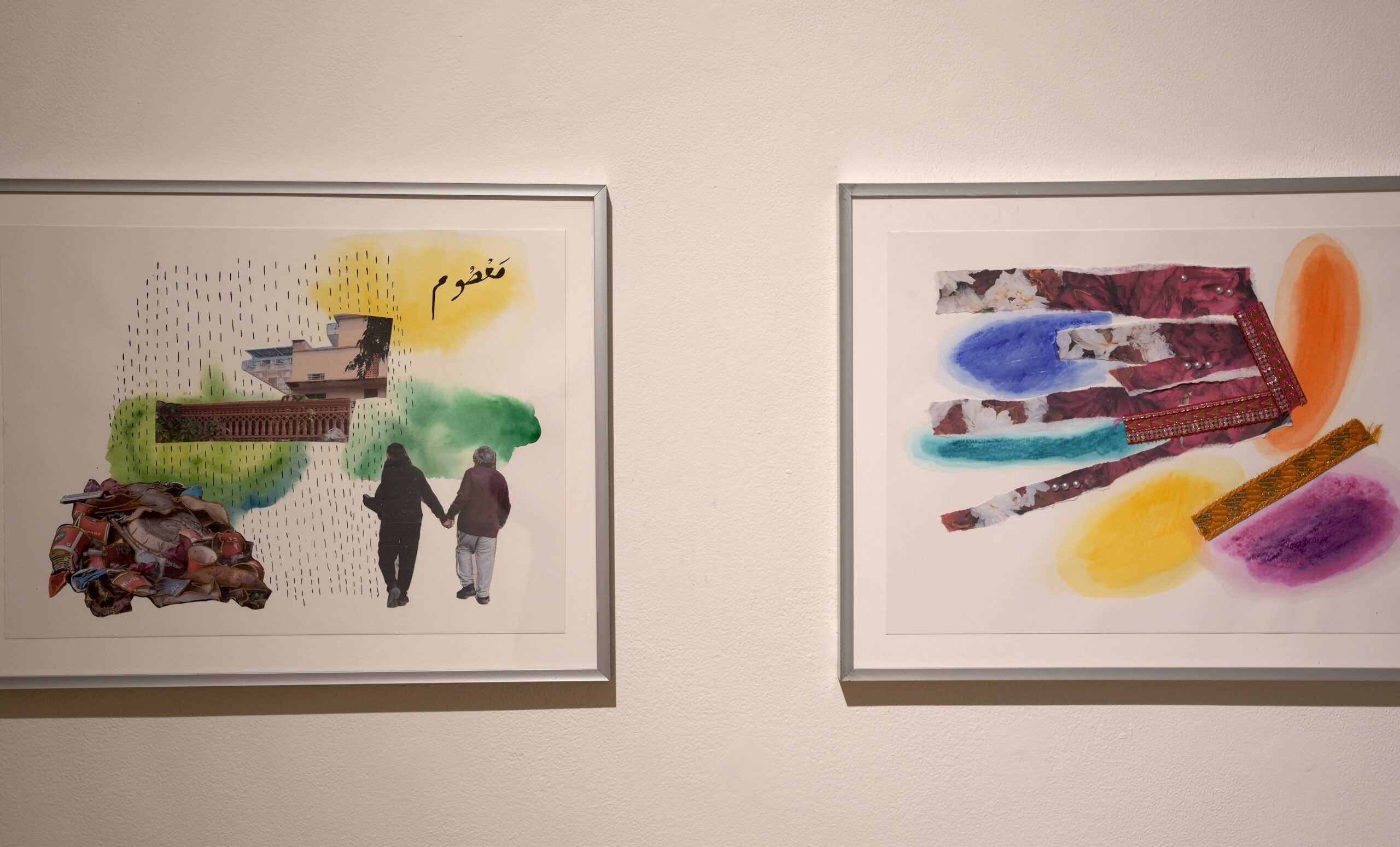
Photo by Declan Snowden.
Until Aug. 1, anyone can take a moment to reflect on their place here by visiting Farheen Haq’s free exhibit, “آبِ رواں Aab-e-Ravaan: Language Like Water,” at the Legacy Art Gallery downtown (lək̓ʷəŋən territory).
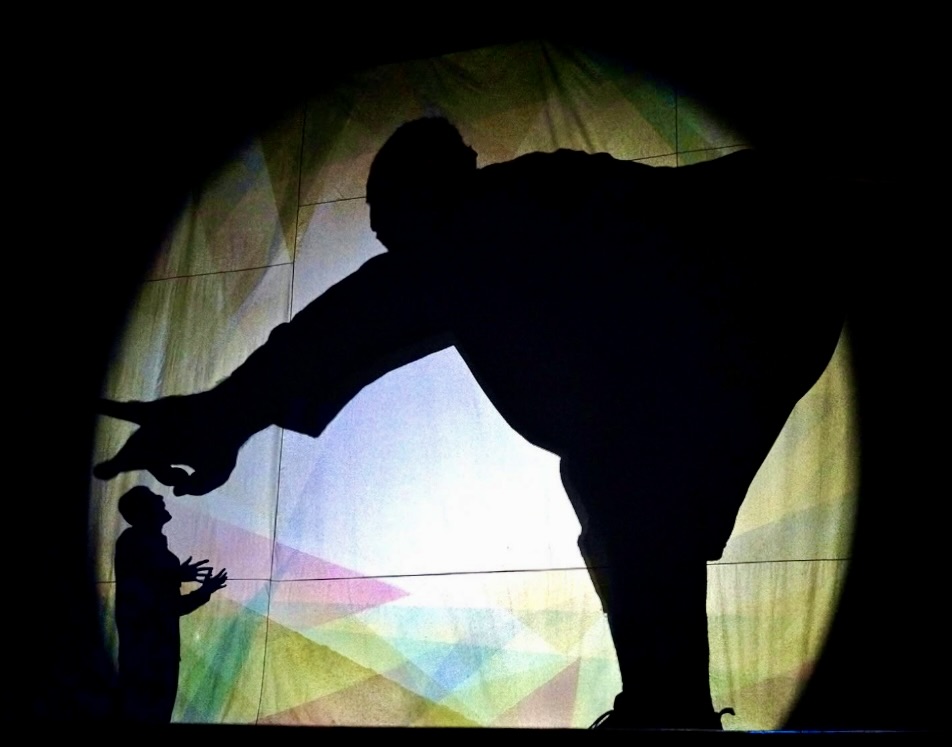
Filled with digital art, textiles, poetry, and even an immersive “Royal Red Tent” room that seems miles outside the gallery, the exhibit transports viewers away from the bustle of downtown Victoria and into a space that, like the flow of water, creates calm and introspection. The exhibit explores memory, ancestral connections, land, and migration, among other themes.
Farheen Haq is an interdisciplinary artist who took undergraduate fine arts courses at the University of Victoria. In an interview with the Martlet, Haq said that by taking these classes, she discovered that art was her calling. The university also gave Haq access to digital arts equipment, sparking her interest in video and photo-based art, which is prominent throughout the exhibit.
The exhibit title, “Language Like Water,” comes from Haq’s exploration of her first language, Urdu. Haq described Urdu as a language of fluidity, like the ocean. “Urdu emerged not from stillness but from movement,” a description in the exhibit says. In the mobile tented cities of the Mughal court, many people gathered and hybrid languages emerged, including a shared speech called Rekhta, later named Urdu from ordu, meaning camp.
Like water, Urdu has acted as both an anchor and a guide for Haq. She said the language contains guidance for how to speak and engage within a culture of respect, with protocols embedded in its structure.
“[Urdu] helps me to arrive here on lək̓ʷəŋən territory and to be in conversation with the lands and waters and the people,” they said.
The Urdu portion of the title, “آبِ رواں Aab-e-Ravaan,” is not a direct translation of “Language Like Water.” Aab, a Persian word, means water, while e-ravaan means flowing. For Haq, the idea of flowing water evokes the ocean’s ability to hold everything, as all rivers eventually flow into it.
The newest work in the exhibit, a textile quilt hung at the front of the gallery, represents all the waterways along which Haq’s family has lived. It features Urdu words connected to places her father has lived in or fled to, immediately beginning the conversation between water and language.
The exhibit showcases works spanning more than 20 years of Haq’s artistic practice. Creating the works included in the exhibit has helped Haq forge and strengthen connections.
For some textile work on display, Haq invited South Asian and Indigenous participants to a community stitching circle where they stitched, discussed poetry, and engaged in rose medicine. Over nine months, Haq hosted 25 stitching circles with more than 50 participants. Other works feature Haq reenacting her mother’s wedding rituals with the Salish Sea. Haq described how Western feminism initially prevented her from seeing the ways in which her mother is strong and resilient, but by embodying her through art, she has worked to bridge the gap between them and become closer to her.
“I can’t speak for my mother. I can’t make work that represents her, but what I can do is make work that shows how I experience her, and what my transformation has been,” Haq said.
The creation of the exhibit also deepened Haq’s relationship with the land around her. Throughout the exhibit, Haq returns to the question: “How do I speak to the land and the water?”
Beside many of the artworks, first-person plaques explain their personal significance to the artist. By sharing her own story with viewers, Haq hopes to create “an intimate conversation.”
\Though the exhibit is deeply personal and rooted in Haq’s memories, her “aspiration is to always make a work that will resonate and touch the heart of the viewer or witness to the work, whether that’s through … a line [of poetry] … or [encouraging them to ask]: What prevents me from seeing my mother or my father clearly? Where have I been hurt? Where have they been hurt?”
“We all have family, we all have these intergenerational pains, and so my hope is that there can be some self-reflection and connection for viewers.… What are the ways they might want to be in conversation with those relationships?”
The exhibit is open Wednesday to Saturday from 10 a.m. to 4 p.m. Those interested in learning more about its themes can join artist Farheen Haq and curator Anahita Ranjbar for a free and public conversation on June 27 at the Legacy Art Gallery from 2 p.m. to 4 p.m.