
For the second year in a row, the UVic Latinos club and Latin American Studies Department have collaborated to build an ofrenda for Día de los Muertos on campus this fall.
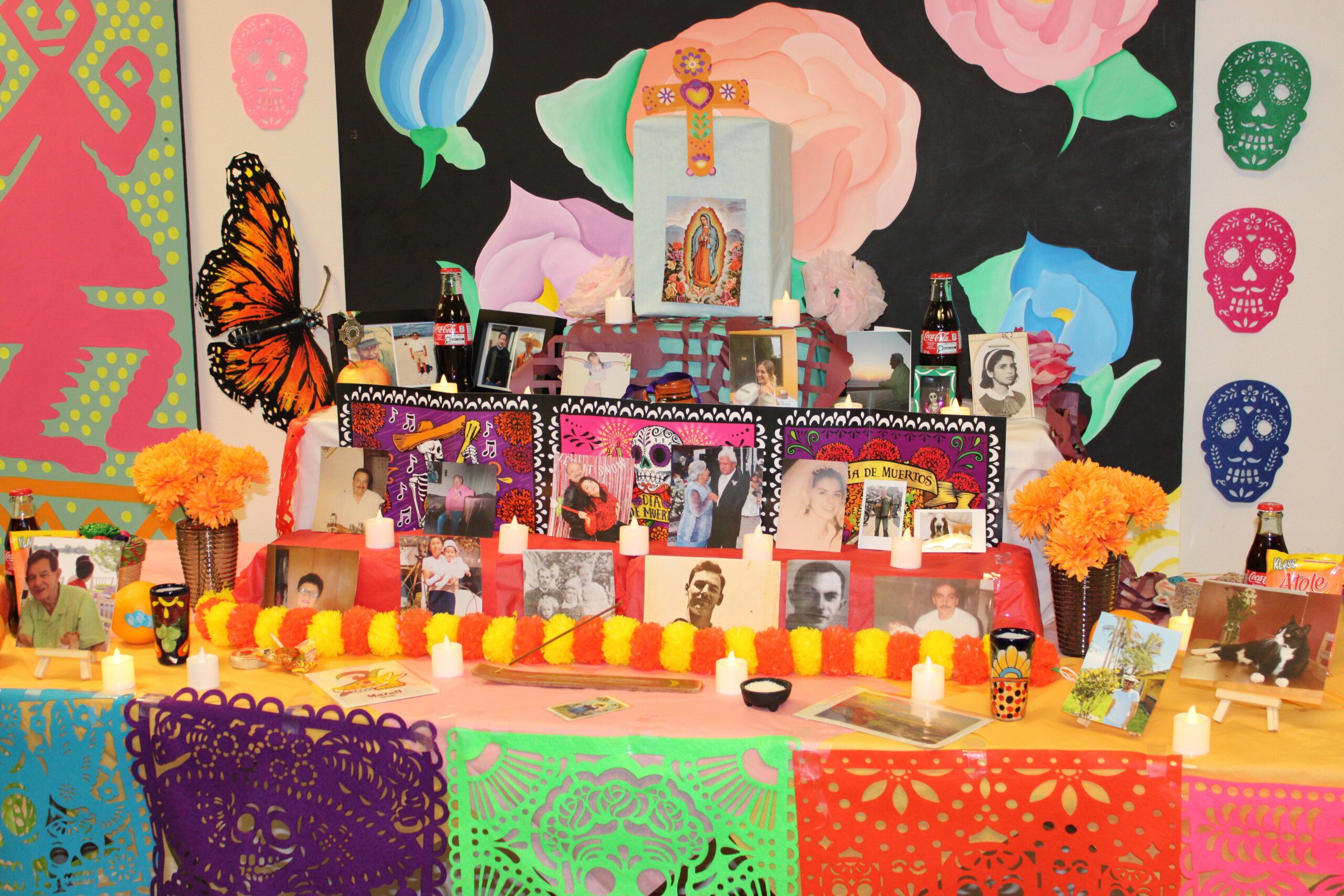
Photo courtesy UVic Latinos Community.
Join UVic’s Latino Club and Latin American Studies (LAS) on Nov. 2 in the A wing of the Clearihue building for this year’s Día de los Muertos (Day of the Dead) celebrations.
From 5:00 to 7:30 p.m., students and staff can take part in this annual event, featuring music, food, and the opportunity to help build and decorate a community altar, or ofrenda. This cultural tradition is deeply rooted in Mexico and celebrated by Latino communities around the world.
So what is the Day of the Dead?
Each year on Nov. 1 and 2, the majority of Mexico can be found in full-blown celebration, bursting with ofrendas, offerings — such as traditional foods and sugar skulls — and colourful cemeteries decorated with flor de muertos (marigolds), candles, and photos of those who have passed.
These two days are a time for friends and families to come together to honour those no longer with us, and to celebrate the belief that their spirits may return to visit the living.
The concept of returning ancestral spirits originates from the longstanding belief that humans consist of two aspects: the body and the soul, which separate upon death. While the physical body exists in the tangible world only for a short time, the spirit continues to exist between the afterworld and the living world, and is able to move between the two during Día de los Muertos.
This belief that life and death are intertwined continues to shape many aspects of Mexican culture today, said Dr. Hector Vazquez-Cordoba, an assistant teaching professor in UVic’s departments of Curriculum and Instruction and Indigenous Education. Día de los Muertos provides a way to process death by shining a light on what can be a difficult subject. This creates space for emotional relief while reinforcing the cultural belief that loved ones are still with us.
Although the origins of Día de los Muertos trace back to a form of “cultural syncretism” between Mexico’s many Indigenous traditions and Spanish influences, many other Latin American countries have their own variations of this holiday, Vazquez-Cordoba explained.
“It’s how we engage with those who have left,” he said. “So even though we are celebrating death, you know, we’re celebrating life.”
“I think it’s really open for people to join [and] celebrate…. As long as you have someone you want to remember, there’s a place for you,” he said.
In an interview with the Martlet, Brenda Jimenez, a co-founder of the UVic Latino Club, emphasized the cultural significance of celebrating this tradition for the Latino community on campus. “We feel that giving a space for everyone to connect and to keep celebrating this event, even if they are far away from home, is something very important and relevant.”…
“The Day of the Dead is a lot about remembrance, community, family and unity,” and in celebrating, there is a sense of feeding a “collective memory,” Jimenez said.
She added that it can be an emotional tradition, and the Latino Club’s intention is to “create a safe space for everyone to celebrate and remember” while also providing a network of support.
“It is also very important not only for our community, but also to get people involved and share a bit of our traditions,” she said.
Jimenez said the altar will remain on display until Nov. 3 for those who are unable to attend the initial event, and that everyone is welcome to contribute a photo of a loved one, a small item they appreciated, or a message in their memory.