
Heading into election season, the District of Oak Bay faces a $300 million repair deficit for critical infrastructure, low housing supply, and some of the highest property taxes in the province
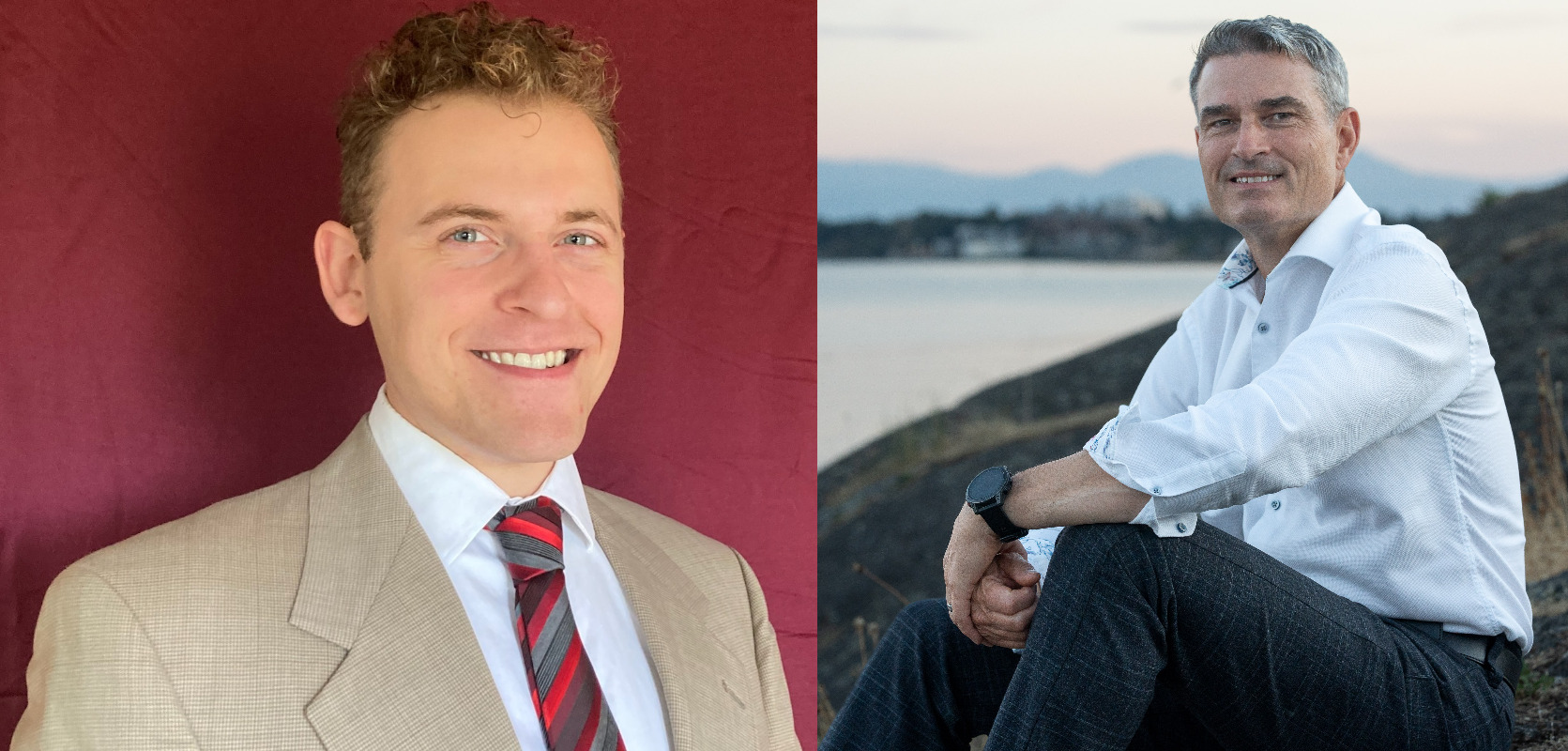
Photos courtesy of Sam Holland and Kevin Murdoch.
On Feb. 19, incumbent mayor Kevin Murdoch announced he would be seeking re-election for the District of Oak Bay. Murdoch was acclaimed to the position in 2022 as the sole person running, and, until recently, it looked like he may be acclaimed again.
However, on Sept. 1, Sam Holland –– a UVic alumnus, and the founding chair of Better Transit YYJ, announced he will also be running for mayor. As the clock is ticking for this year’s local general elections, the two candidates face not only the pressure of winning over the district’s residents, but the pressure of addressing the district’s many issues as well.
Oak Bay is at a critical crossroads. In 2025, Oak Bay passed a massive property tax hike of 11.4 per cent –– significantly higher than that of the District of Saanich (8.02 per cent) and the City of Victoria (6.99 per cent) –– and again this year, Oak Bay’s property taxes were raised by 8.4 per cent, while Saanich raised theirs by 5.35 per cent and Victoria by 7.28 per cent.
One reason for the high property tax hikes year over year is decades of neglect and underfunding to critical infrastructure, such as drainage and wastewater. The result: a projected $1.3 billion in infrastructure spending in the district over the next 100 years, $469.7 million of which is forecast to be spent between 2022–2047.
“We have about a billion dollars of cost to replace all our infrastructure, of which about $300 million is really due in the next couple of decades … so that’s the big bubble that we’re facing right away,” Murdoch said in an interview with the Martlet.
According to Murdoch, the district is spending “around $18 million a year right now, up from about one and a half [million] eight years ago.”
In an interview with the Martlet, Holland acknowledged the district had taken “big steps” toward addressing the infrastructure issue, but had concerns over how rapidly property taxes were being increased.
“By putting that all into property taxes, you’re putting a lot of pressure on people like seniors on fixed incomes,” Holland said. “There hasn’t been any attempt to cushion that blow by widening the tax base, [such as] increasing the number of businesses in Oak Bay [or] increasing the population of Oak Bay through increasing the [amount] of housing.”
While housing is a challenge throughout the country, Oak Bay’s path forward is particularly tumultuous. In 2023, the B.C. government issued directives to municipalities across the province to build more housing. Oak Bay and West Vancouver fell significantly behind their year one targets (Oak Bay built 16 of 56 houses), prompting the Minister of Housing and Municipal Affairs to release a statement on the lack of progress, and issue more directives to “streamline” housing production.
However, the district said in a release that their completion of 16 houses in year one was a “significant increase from historic levels of approximately two net new units per year” from 2019–2022.
Murdoch said Oak Bay largely struggles to hit housing targets due to a lack of available land.
“We don’t have any vacant land in Oak Bay and the land costs are very high. So any new development requires buying at least one piece of property, often two or three to do land accumulation to make anything higher density,” he said.
Both Holland and Murdoch want to bring more density to the district. Murdoch’s platform includes advocating for UVic to develop a high-density project on Cedar Hill Corner, a property owned by UVic that has the potential to hold up to 3 800 housing units in the district.
Holland wants to bring more housing and business to the district, particularly in centres like Estevan Village and Oak Bay Village. He also wants to pre-approve designs for small apartments, townhouses, and laneway houses to speed up processes.
Beyond tackling these pressing issues, Holland’s platform includes building a community clinic to increase healthcare access, tackling the climate crisis on a local level by offering interest-free loans to replace outdated furnaces and heat pumps, and pushing for more third spaces for arts and culture in the district, amongst others.
Murdoch’s platform also includes supporting the arts by propping up the creation of “micro-venues” and supporting local galleries, addressing climate challenges by “ensuring that anticipated climate change impacts such as sea-level rise are incorporated into long-term engineering and planning decisions,” and “reducing and managing” the deer population, amongst others.
Voting for the 2026 local general elections will be held on Oct. 17. The elections will include voting for new mayors and councillors, regional district directors, school board trustees, parks boards, and the Islands Trust. More information on this year’s local general elections can be found at elections.bc.ca.