
TikTok language’s impact on the way we discuss serious issues is dangerous
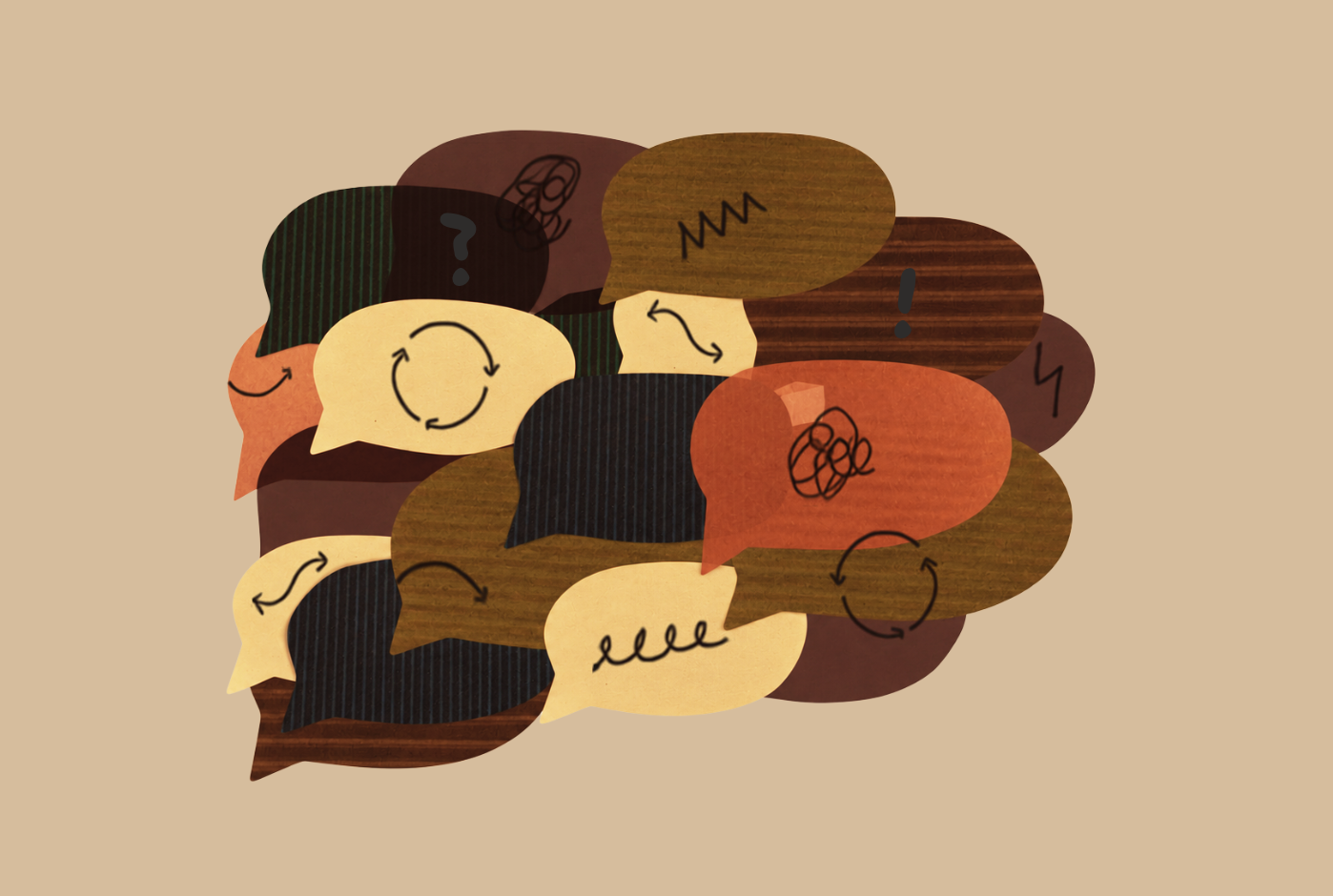
Illustration by Sabina Mendoza.
Lila Grierson serves as a Director-at-Large on the UVSS Board of Directors. The Martlet does not allow student politicians to write news or play any part in the paper’s editorial process, but they may write op-eds like this one at the discretion of the Editor-in-Chief.,
Neurospicy. Seggs. Unalived. There’s a new language developing on TikTok, and it’s damaging the way we communicate. If you’ve gone on social media in the past three years — and, let’s face it, you have — you’ve probably been exposed to “Algospeak,” the online code language that uses deliberately misspelt and substituted words to skirt content restrictions.
While these substitutions may provide a temporary solution, they also cause miscommunication and trivialise important topics. What’s more, the professed content restrictions may not even be true.
We need to phase out algospeak and get back to naming important topics directly, or risk losing what’s left of our ability to communicate.
The term “algospeak” first came into use in 2021, and has become popularized by journalist Taylor Lorenz in 2022, according to popular social media linguist Adam Aleksic, whose recent book, Algospeak: How Social Media is Transforming the Future of Language shot to the top of the New York Times bestseller list when it was first released in June 2025.
In the book, Aleksic notes that coded language is often used as a medium for hate speech. For example, if I said the word “acoustic,” would you think of a classical guitar, or a slur? In 2023, the term “acoustic” was co-opted by online trolls to mean autistic; this substitution allowed the bullies to say cruel things without the algorithm recognising it as hate speech.
Currently, there is no standardisation in algospeak vocabulary, making it hard to know whether the language you are using has been sneakily assigned a new meaning. This was the case for actress Julia Fox, who was flooded with criticism after leaving a snarky comment on a TikTok video, not knowing the creator was using the word “mascara” to mean sexual assault.
Fox later posted an apology video, saying she didn’t understand the subtext because she “wasn’t on that side of TikTok.” However, the subsequent push to “cancel” her revealed just how much pressure there is for social media users to be up to date on the “latest” internet lingo.
The only way to achieve that would be with a comprehensive list of algospeak terms, which is laughable even in concept; language trends evolve too fast to pin down definitions. Besides, it would render the code words useless, essentially handing the censors an index for their no-fly list.
In his book, Aleksic argues that, due to intellectual property concerns, little is actually known about how apps like TikTok push content, and that it’s hard to tell if Algospeak actually works to evade alleged censorship — if such censorship even exists. Algospeak emerged as the response to theories that TikTok bans or buries content with certain provocative words.
However, the lower view count of plain-speak videos may simply be due to their lack of visual excitement — captions featuring emojis or unexpected wording are just more interesting for the viewer, which encourages creators to use algospeak. If an algospeak video receives more user engagement than its plain-speak equivalent, the algorithm will feature it more prominently.
By this theory, plain-speak content is not being suppressed; it is simply less popular. TikTok’s official operating page states that unless the user enables “restricted mode,” the algorithm does not flag content with “explicit references to mature or complex themes.”
Whether the censorship allegations are true or not, the fact is, our language online is changing. At first, this doesn’t sound like much of a problem; there have been code words online since the birth of the internet. This new form of codified language may not seem particularly dangerous, but it creates social taboos and diminishes the importance of its subject matter. Algospeak features prominently in discussions of politics, self-harm, and assault; examples include a watermelon emoji to symbolise Palestine, the word “barcode” signifying self-harm scars, and the abbreviation “PDF” in reference to pedophilia.
Studies have long found that using euphemisms creates stigma around the “forbidden” words. By alluding to topics like those listed above, instead of outright naming them, we imply that there is something embarrassing or socially unacceptable about those subjects. It dissuades open, honest discussion, which we desperately need.
What started as a theoretically clever way of avoiding perceived censorship has become a system of deepening stigma, which prevents productive conversation about controversial issues. Not only that, but since standardising these new terms would necessarily mean they lose their secrecy value, this language is only functional to those in the know, causing a rift between frequent social-media users and those who spend less time online. By shying away from provocative words, algospeak trivialises these meaningful and critically important topics.
I think we’d all be better off letting algospeak wither away quietly. We can do this by making a conscious effort to use plain-speak terms when discussing sensitive subject matter, and encouraging our friends to do the same. We can’t let algorithms dictate how we communicate. TikTok users, it’s time to speak for yourself.