
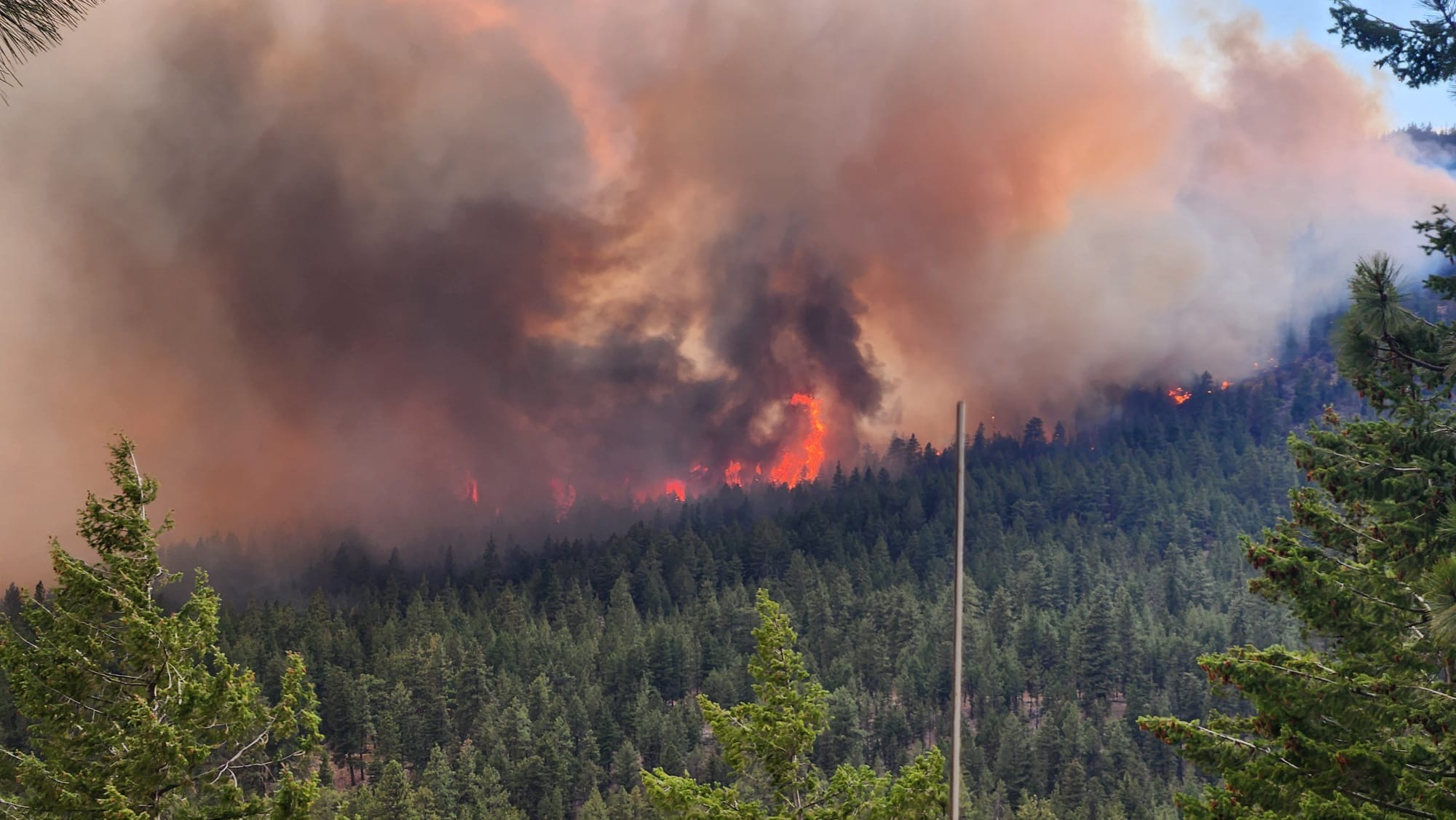
Image via Kamloops Fire Centre.
It’s Aug. 7, and a raging fire blazes through the Okanagan region. It starts in the afternoon, about 15 kilometres west of the District of Summerland in a community called Faulder, but rapidly grows eastward, reaching Summerland. Within hours, it has burned an estimated 5 000 hectares of land.
By the evening, 20 000 people are forced to evacuate Summerland and the surrounding regions –– Summerland is home to 12 042 people alone.
The fire was unprecedented, and was exacerbated by extreme winds on a particularly dry and sunny Okanagan day. It also led to the confirmed death of one person, who was trying to rush out of their house.
According to a preliminary Post-Wildfire Natural Hazard Risk Analysis (PWNHRA) report, the area of Summerland and its neighboring towns have a long history of wildfire and natural disasters. The cause of the wildfire is still under a multi-agency investigation, including B.C. Wildfire Service, the Compliance and Enforcement Branch, the RCMP, and other law enforcement agencies.
The B.C. Wildfire Service says the fire covered 25 163.2 hectares of land –– or 251.63 square kilometres –– and resulted in the destruction of 150 homes; 110 in the communities of Faulder and Meadow Valley, and 40 in Summerland. As a whole, 2026 has been one of the most devastating wildfire seasons in B.C. for damage to property.
The Bald Range fire was declared “held” on Aug. 28, ending a three week-long provincial state of emergency, and was declared officially “out” on Oct. 28. However, the disaster does not simply end once it’s been extinguished. Efforts to rebuild lives and return to a state of normal will be ongoing for some time.
Fire in our backyard
One of the homes lost was of 19-year-old Ava Schrader, a longtime Faulder resident and second-year student at Capilano University in North Vancouver.
Schrader was home this summer in between semesters when the Bald Range fire broke out. On Aug. 7, as evacuations began, Schrader was on her way to Vancouver to see friends before embarking on a cruise.
“Everything was normal until it started,” she said.
Around 5:30 p.m. or 6:00 p.m., while stopped at a gas station in the town of Summerland on her way to Vancouver, Schrader received a text from her cousin’s girlfriend mentioning that Schrader’s family had been evacuated.
“I called my mom, and she was already driving into [Summerland],” she said. “She was like, ‘the fire is in our backyard.’” At that moment, Schrader knew that her house was gone.
“My mom and stepdad saw the smoke right above our house,” she said. “By the time they realized they had to leave, they had 20 minutes to get out of the house and grab everything.”
Schrader said that firefighters were knocking on the doors of her home, telling her mom and stepdad to leave.
As she was leaving Summerland, Schrader could see the big cloud of smoke on top of her community of Faulder, and was starting to cover the community of Garnet Valley. “That’s the direction the wind was blowing.”
“The conditions of that specific day caused the fire to be so aggressive,” she said. “It was just such a windy day that as soon as the fire caught, it just destroyed the entire neighborhood.”
Another of Schrader’s friends texted her on her drive out confirming that “Faulder is gone.”
After she returned from her cruise, Schrader moved into an Airbnb with her mom and stepdad in Summerland for a week. Now, she is in a home that they are renting.
Schrader said that the community has shown incredible kindness and generosity to those who had to evacuate, and to those who have lost their homes.
“In Penticton … volunteers set up a free store for all of the people that lost their houses,” she said.
She also said that Capilano University reached out to all the students from the Summerland area and offered emotional support, like the choice to see a counsellor, and emergency funding. Schrader received emergency funding herself which was helpful to her.
“There are still things that I’m having to go out and buy because you don’t realize you need something until you lose it. Like, a hot glue gun.”
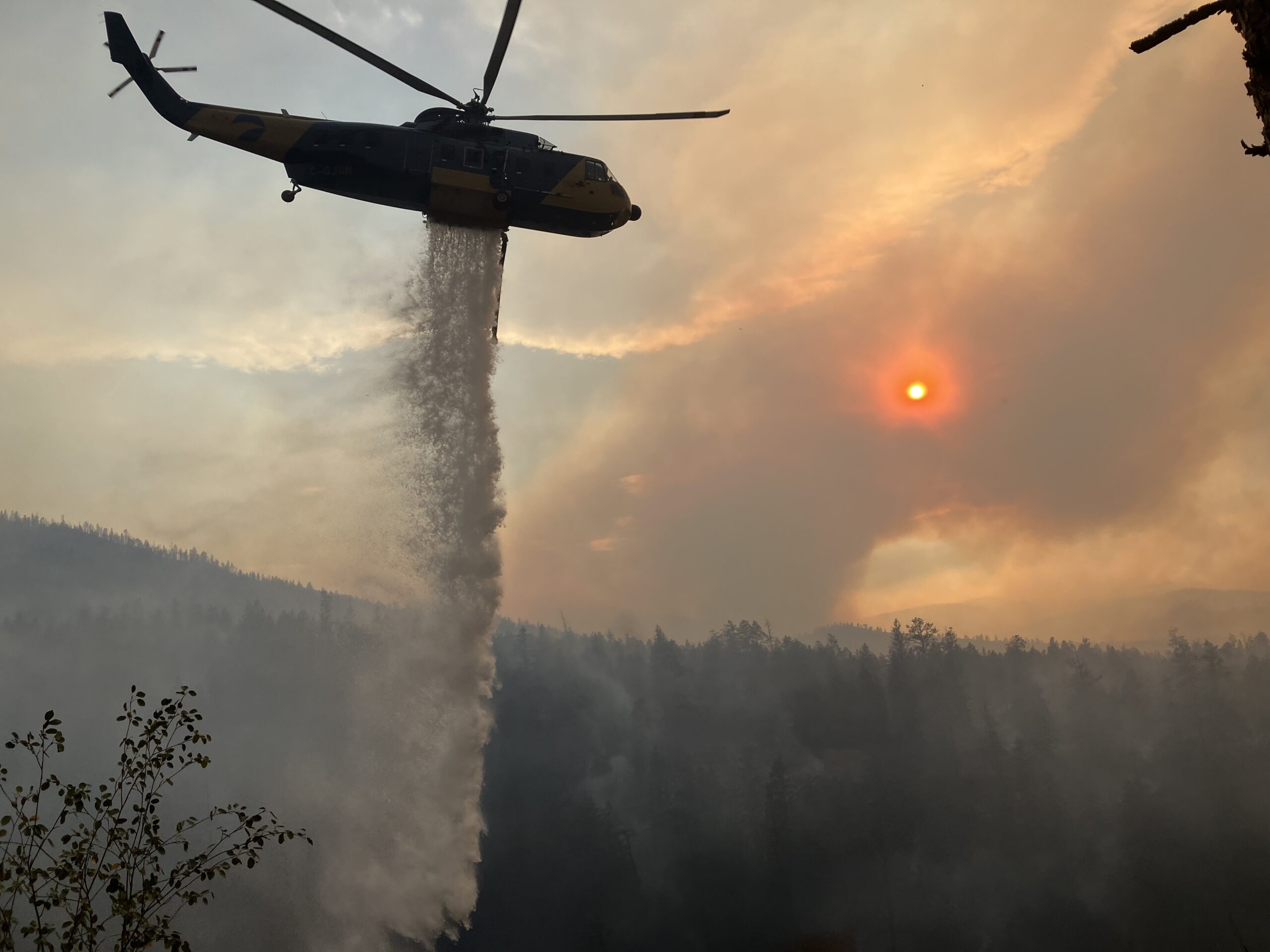
Image via Kamloops Fire Centre.
To spread awareness and document the unprecedented fire, the Summerland Museum has arranged The Bald Range Wildfire Collection which includes testimonials, news interviews, and research regarding the fire.
Schrader acknowledged that the Okanagan is dry, and because of that the summers are also unpredictable and scary, but she said she also recognizes the impact that climate change had on the Bald Range fire.
“Climate change, absolutely, has to do with the conditions that the fire was in, and it was just unlucky for us to be at such a bad time of year, on such an aggressively windy day” she said.
Dilynn Scott, a first year student at UVic, was born and raised in Kelowna. She described the winters growing up as always having “at least a foot of snow,” but then slowly as she got older, it became less and less likely that they’d have a white Christmas.
“I have younger cousins, and watching them grow up without seeing snow in the winter is really weird.”
Scott said that the summers have also been continuously getting warmer, and seeing smoke from fires nearby has been a part of summer “pretty much since I can remember.”
Due to the Bald Range fire, the air quality in Kelowna was potentially hazardous, and residents were advised to avoid outdoor activities. Scott said that there were days where you couldn’t go outside because of how heavy the smoke was.
She also knows several people with asthma whose everyday tasks were impacted by the smoke. “There’s a lot of mundane things that get interrupted.”
Because fires in the area are so normalized now, Scott has prepared a go bag with essentials packed at all times in case a fire was to arise in her own neighborhood. “We’ve never evacuated, but it’s definitely been like, it could be tonight.”
Erik Petersen is another student at UVic, in his second-year studying political science. He comes from the community of Naramata, which is directly across Lake Okanagan from Summerland.
“We could see the fires from across the water and the ash would fall directly onto [Naramata],” he said.
Petersen was working at a restaurant in Penticton this summer when his boss told him mid-shift that Summerland had been evacuated.
“It was just sort of horrible to see all the people who had to evacuate and head into Penticton” where the main evacuation centre was located, he said.
On his drive home, Petersen said he could see smoke arising from the fire and its orange haze.
“I pulled over while I was driving home because I realized I could see the fire,” he said. “That’s sort of when it clicked in my head, oh, it’s not a small fire, it’s on the town. I could see it getting really close to Summerland.”
Petersen said that this fire reminded him and his family of the danger of living in the Okanagan, an area prone to forest fires. “From then on, we made a fire kit and an evacuation plan … we made a plan of what we would do if Naramata got evacuated.”
Coming back to UVic, Petersen felt a sense of melancholy. He said that the feeling of passive dread didn’t go away once he came back to Victoria. But he said a good support system helped him through that time.
One thing Petersen said people should take away from the fires in Summerland is that “people need to recognize, you might not see the effects because they haven’t happened to you yet, but they will at some point.”
“Ignorance is bliss in a sense, but only to a certain point where it becomes detrimental,” he said. “[Climate change is] probably the biggest threat to human existence.”
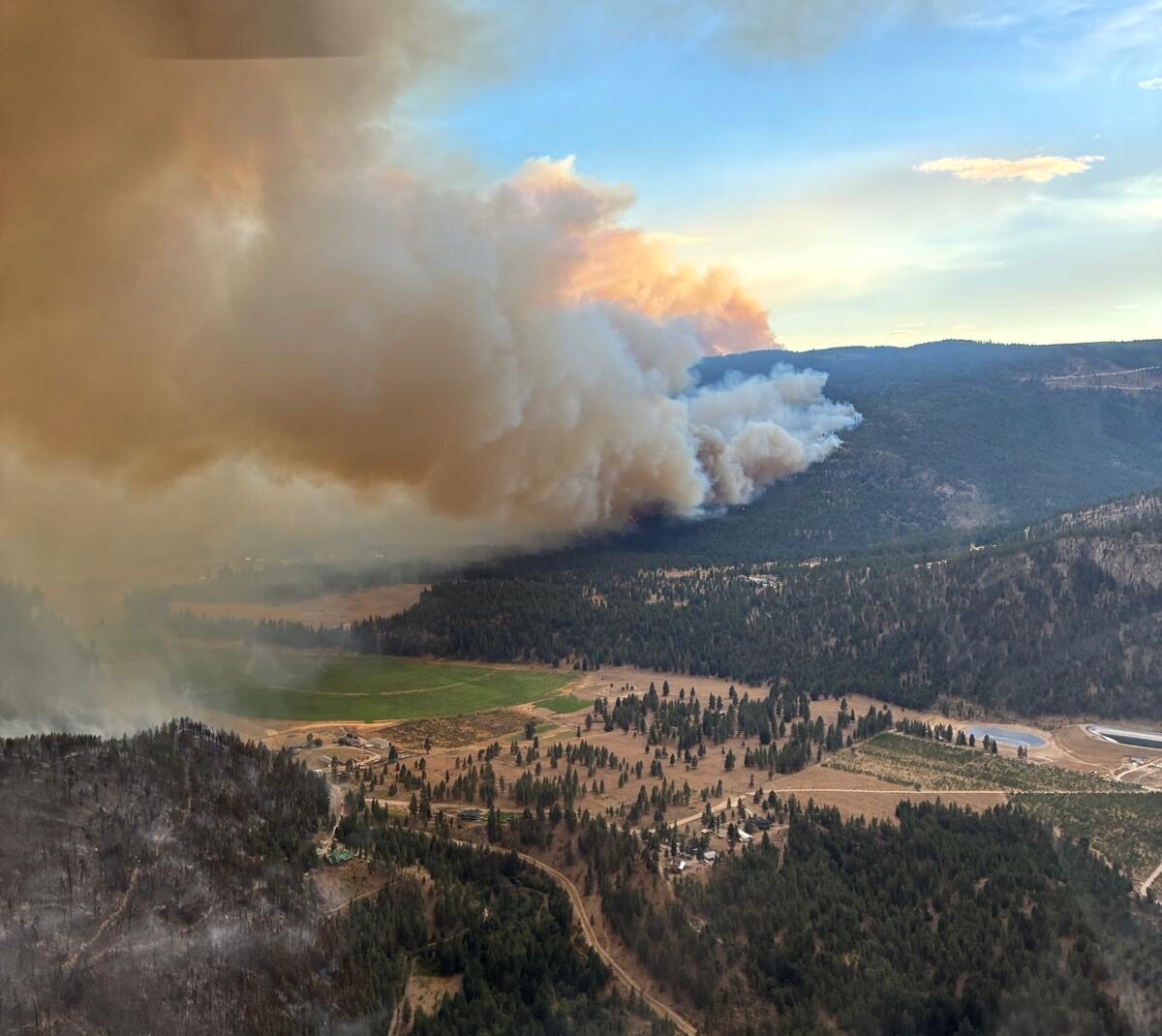
Image via Kamloops Fire Centre.
Raja Gupta, a science and math teacher at Summerland Secondary School, told the Martlet that Summerland’s climate has changed in the last 30 years he has been living there.
“It used to be quite a dry climate year round, even in the winter, we would get snow but it would be powder,” he said. “Now our rains are heavier and steadier … It doesn’t snow much anymore.”
Gupta has been in Summerland since 1997. On Aug. 7, he could see the fire over the hills from where he lives in Lower Town, but he said he originally didn’t think much of it.
At around 5 p.m., some of Gupta’s friends who lived elsewhere in Summerland asked if they could come stay at his house because they received an evacuation notice. Around 6:30 p.m., when his friends walked through his front door, they told him they didn’t have a house to go back to.
At around 11 p.m., Gupta said he received a text from a family friend stating the whole town was being evacuated. “It was very surreal,” he said, thinking “‘It’s never going to happen, they’re not going to evacuate the whole town.’”
Gupta had about 20 minutes to leave his home.
“We were out of our house for about two weeks…. We didn’t know what we would find when we got back,” he said.
Gupta ultimately did not lose his home, but he knows others in Summerland who did.
Returning to school a month after the fires, Gupta said that everyone in the building knew that some people had lost their homes, including some of their students. The staff were “mindful of and respectful of and understanding of the variety of situations that were taking place,” he said.
Gupta says he has a couple students in his class who didn’t lose their homes, but were not in them for an extended period of time, and some who have still not returned to them.
“In times of grief, there’s something to be said for trying to provide as normal and predictable of a situation as possible,” he said.
In preparation to come back to school, the staff at Summerland Secondary organized a get-together beforehand to catch up, touch base with each other and see how everyone was doing after the fire.
In his over 30 year-long teaching career, Gupta has been teaching climate change as part of his curriculum for many years, and has noticed the Okanagan’s climate evolve over those three decades.
“When you’re looking at climate over the broader scale, [30 years is] a rapid change,” he said.
He said he hopes that this experience impacts his students in how they think about climate change. “But it’s not just the students, it’s the adults.”
“From an educational standpoint, [the students] get it,” he said. “I certainly hope the adults get it.”
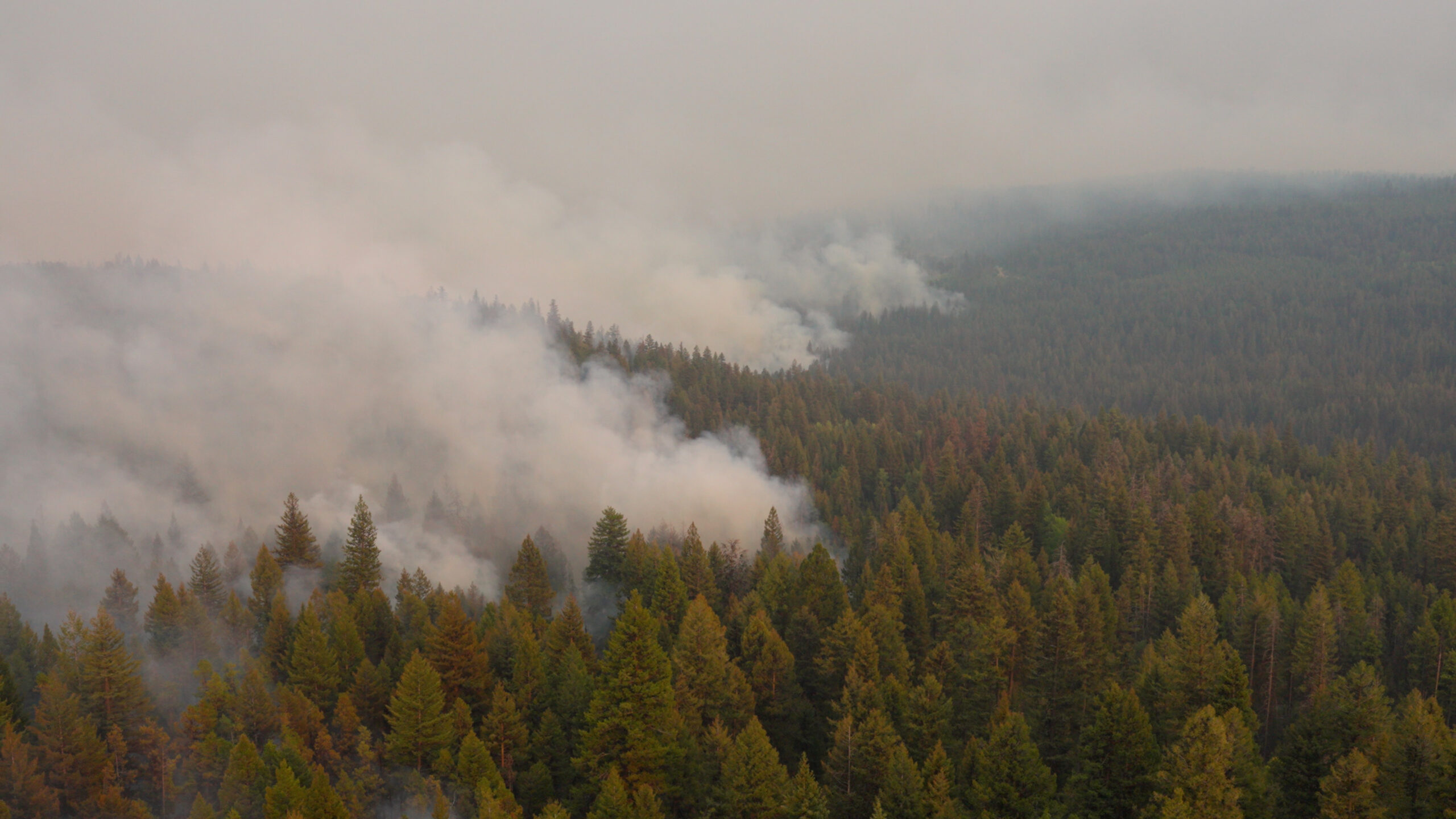
Image via Kamloops Fire Centre.
Fire on our doorstep
Dr. Ian Mauro, professor of environmental studies at UVic and executive director of the Pacific Institute for Climate Solutions (PICS), said in an interview with the Martlet that climate adaptation “is inherently cultural.”
“It is something that requires a combination of humans, insight, research, activation, and real planning,” he said.
He said the Okanagan region is increasingly prone to fire due to hotter and drier summers as a result of climate change.
“We live in an era where our homes and communities are threatened by this existential and increase in [fires],” he said, and for young people, this is now part of their summer breaks. For youth now, “there isn’t fresh air to breathe.”
Dr. Eric Higgs, also a professor in the School of Environmental Studies at UVic, said that a lot of the ecosystems in B.C. are dependent on fires through cultural or natural fires.
He said that there is clear evidence that prescribed burning is critical in changing the climate and restoring balance.
“We have to be doing more of it,” he said.
But he also said that the most important thing to do right now is to let the communities heal.
“I could talk a lot about prescribed fire, but then I think about, well, ‘what if my house was taken out? How would I feel?’” he said.
“That process of grieving and support, and getting the community back together is a critical first step,” he said.
Izzy Leyshon, a Master’s student at UBC Okanagan in earth and environmental sciences, is specializing in prescribed burning and fire ecology.
She told the Martlet that her main concern in the aftermath of a fire like Bald Range would be slope stability, because the same root system does not exist after a severe fire.
A landslide occurred in Summerland in late October, after the fire was declared “out.”
Leyshon also sees prescribed burning as an important forest management tool. “Fire is a natural part of the landscape throughout British Columbia, and it was used [historically] as a tool for ecological benefits and risk reduction and cultural significance” before it was made illegal under the Bush Fire Act of 1874.
In March 2024, changes to Wildfire Regulation were made to allow for cultural and prescribed burning in B.C. once again. The change resulted from engagement with First Nations in the province and the B.C. Wildfire Service.
Leyshon said that by integrating prescribed fire as a tool there can be lots of ecological benefits which can help with risk reduction.
She also said that there is a decent amount of opportunity now to learn about wildfires at the university through guest lecturers.
In an emailed statement to the Martlet, a UVic spokesperson said that the university “offers a range of supports and services to help students navigate the impact of natural disasters and other unexpected crises.”
UVic students can receive mental health services financial support, academic advising, and other resources depending on their circumstances.
“When significant events such as earthquakes, floods, fires or political unrest affect countries or regions where members of our campus community have family, friends or other connections, the university regularly reaches out directly to impacted students to share messages of support and information about available resources,” the UVic spokesperson said.
Leyshon said that overall fire risk is a reality in the community, and is leading to more greater dialogue about fire risk and preparedness at UBCO.
“Fire is at the doorstep of the campus,” she said.