
Last month’s fire at the Traveller’s devastated psychology and gender studies student Samten Stobbe, coinciding with the weekend she celebrated thirteen years of sobriety
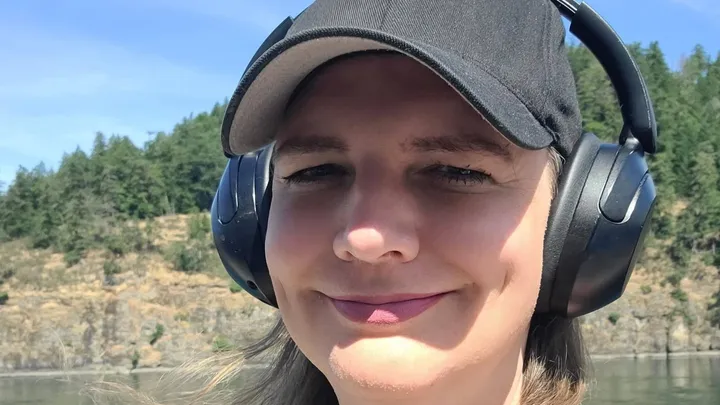
Image via Suzanne and Candace Stobbe on GoFundMe.
Samten Stobbe, a 49-year-old UVic student, has studied at UVic on and off over the last thirty years, persevering with passion through an opioid dependency and a journey to discovering her own gender identity.
When Stobbe graduated high school, she wanted to pursue music and took a gap year to study music theory and take saxophone and piano lessons. In 1995, she left Manitoba and arrived at UVic for her first year of university, where she planned to study education or transfer to a jazz-music school.
By the end of her first year, Stobbe wanted to pursue classical performance. But in 1996 she opted to take time off of school to travel. Five years later, she returned for her second year.
“My second year went really well on paper, but my drug use escalated,” Stobbe said. One week before what would have been her third year, she visited the music building to practice, and found a notice posted on the door of her saxophone teacher’s office informing students that a classmate had died on a camping trip that summer.
“It was devastating,” she said. Stobbe had played in a saxophone quartet with the student during her second year, spending three hours a week with him. She said the resources that are available to students now, such as counselling and outreach, were not available back then.
At this time, Stobbe was at the beginning of a physical opioid dependency.
Both of these factors, as well as a change in instructor that some students weren’t comfortable with, contributed to Stobbe’s decision to drop out at the beginning of her third year.
“It took me a number of years to really figure out that I needed to learn how to grieve for him, and I realized that I dropped out because I was incapable of grieving.”
After dropping out, Stobbe’s drug use continued to escalate and she remained with a physical opioid dependency for 11 years, and attended five treatment centers, before surrendering to her parents for help. Her final detox in 2013 was at a rehabilitation facility in Kelowna, BC.
She said that harm reduction is intended to lead to total abstinence, which often does not happen. “People are on harm reduction for the rest of their lives, and I didn’t want to be one of those people. So for me it’s total abstinence.”
At eight years sober, Stobbe returned to UVic to resume her degree in her third year. Stobbe wanted to explore “academia proper,” and is now pursuing a general degree in psychology and gender studies, with a minor in music.
Stobbe, who identifies as transfeminine, said that assignments for her gender studies classes have helped her understand that her drug use was a way of coping with her repressed gender identity. She recalled moments from her childhood, such as asking to try on her sister’s nightgown.
“The signs of being transgender were there when I was a child, but it wasn’t as prevalent as it is nowadays,” she said. In the ninth grade, she began using cannabis, and she said that “it was easier to stay stoned than to look at [her] gender identity.”
She didn’t begin to learn about queer identity until her adult life, and began expressing her feminine gender more after her successful recovery in 2013. “I went from gender fluid to gender queer to transfeminine.”
Returning to UVic, Stobbe plans to pursue counselling.
Likening her experience to being a “triple threat” — someone who can sing, dance, and act — in the performance world, “I thought I could be a triple threat counsellor because I have direct experience with addiction, and I have direct experience with mental health issues, and I have direct experience with gender issues,” she said.
Stobbe said that she thinks direct experience is a valued asset in counsellors today. In her own personal experience at treatment centers, Stobbe said that counsellors with direct experience always appeared to be the most valued by people in treatment.
Over the last two years, she has lived at the Traveller’s Inn, which was destroyed by a fire on Oct. 24. Stobbe lost everything in the fire, including her cat, The Bella Monster, her collection of musical instruments, and all of her academic materials such as flashcards and annotated articles.
Though she hasn’t played music much over the last few years, Stobbe said that “losing the instruments was like losing a part of [her]self, losing the ability to connect with [her]self in the way that only happens when you’re playing.”
In the same weekend that the fire occurred, Stobbe was celebrating thirteen years of sobriety, and her parents had come to the island to celebrate with her. “It was serendipitous that they were here when I had to move, because I don’t know how I would have done it without them.”
Stobbe has now resettled in a studio apartment that a friend, who is a property manager, helped her locate and apply for. “I was really fortunate to find such an affordable place, and it’s so much better than my room at the Travellers [Inn] was.”
Stobbe’s sister has started a GoFundMe to help collect a “fire recovery fund”, which has raised over $15 000 at the time of publication. The Gender Empowerment Center (GEM), which she said is her favorite place on campus, has also planned a bake-sale fundraiser for her. The bake sale will be on Nov. 25 from 11 a.m. to 2 p.m., outside the Michèle Pujol Room in the SUB.
“I’m grateful for the outpouring of support,” she said.