

MARMOTSat’s launch moves UVic one step closer to becoming a “space-focused hub” on Canada’s West Coast
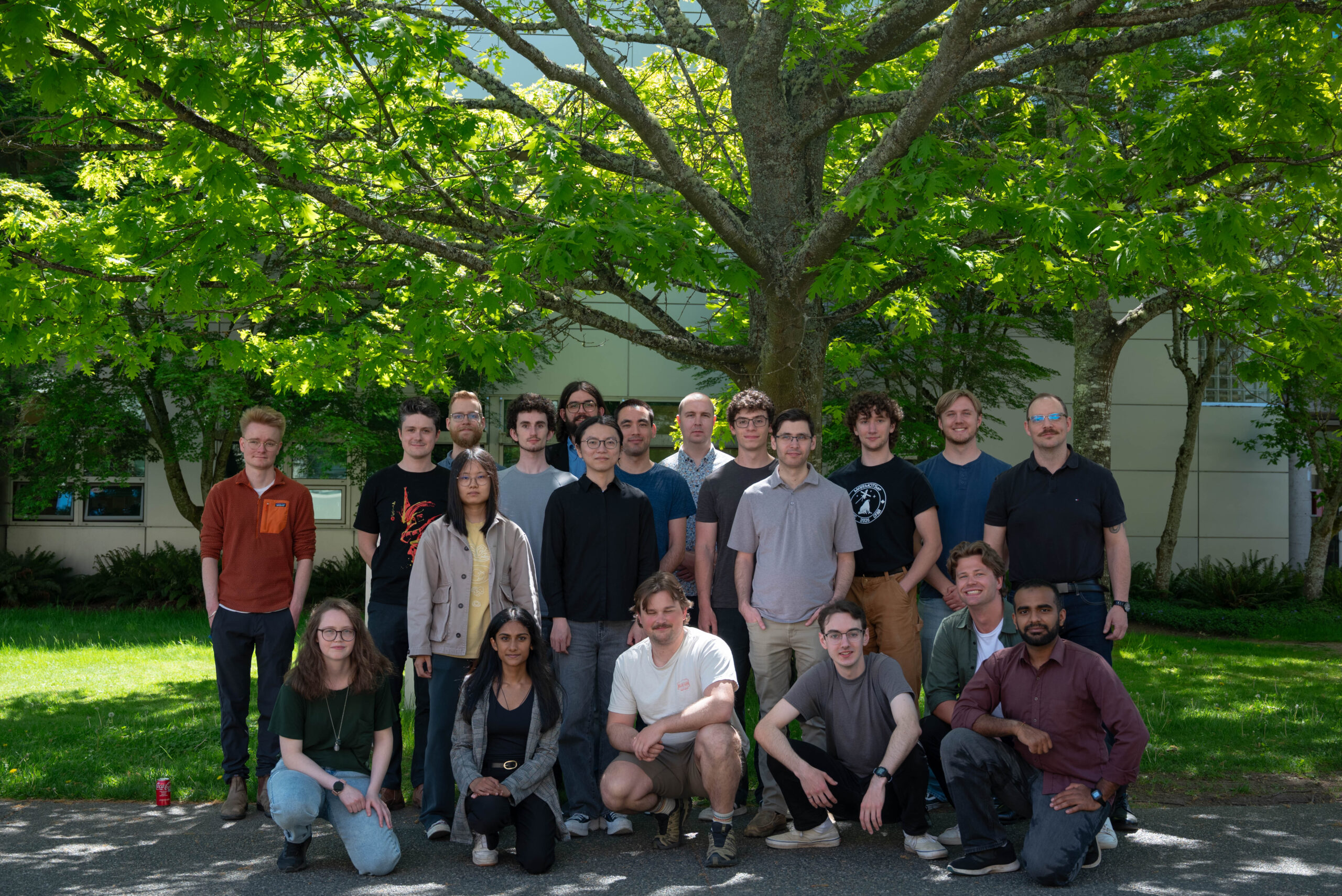
Photo courtesy of the Centre for Aerospace Research.
At 12:12 a.m. on Tuesday, July 7, a shoebox-sized satellite built by UVic students at the Centre for Aerospace Research (CfAR) was launched into orbit from the Vandenberg Space Force Base in California on SpaceX’s Transporter-17 mission.
MARMOTSat is a CubeSat designed by UVic students, CfAR Space Division engineers, and volunteers from the UVic Satellite Design (UVSD) team. In total, nearly 60 people contributed to MARMOTSat, and the list of contributors appears on the satellite’s face plate.
This is the second CubeSat sent into orbit by CfAR, with the first, ORCASat, launching in 2022.
Blake Baldwin, UVic electrical engineering grad, space division electrical designer, and former UVSD president who has been with CfAR in different capacities since 2022, told the Martlet that the name comes from the endangered Vancouver Island Marmot, following ORCASat’s animal theme.
MARMOTSat serves different purposes than ORCASat, and will be in orbit significantly longer. While ORCASat was only in orbit for six months, including two on the International Space Station (ISS), MARMOTSat’s mission will last for up to 10 years.
Baldwin explained that MARMOTSat has two key payloads: amateur radio outreach, and atmospheric research on climate change’s impacts on the ionosphere.
He also noted that the project is funded by the Canadian Space Agency (CSA), and said that “their main deliverable for us is just making sure that we’re actually training highly qualified personnel in the Canadian space sector.”
CfAR provides funding to master’s and PhD students to contribute to various parts of their projects, from research to hands-on engineering experience. They also hire co-op students from UVic and other institutions, and offer opportunities for honours and capstone projects.
MARMOTSat’s Project Manager, Levente Buzas (UVic BEng and MEng), is a radio-frequency engineer and manager of the space division. He started with CfAR in 2018 while working on his undergraduate honours thesis.
Buzas told the Martlet that one of the unique aspects of their program is that, while most universities working on CubeSat projects would buy satellite components — like power supplies or radios — UVic builds them in the lab.
“We will train the next generation of space engineers who can go and work at large companies in Canada on operational class missions,” Buzas said. “[It’s] creating opportunities in Canada so the graduates don’t have to move to Silicon Valley or Europe.”
Evan Peters, a master’s student, space division lead electrical designer, and payload lead on MARMOTSat, attended one of the launch events in California. Baldwin and Peters went to the SpaceX event, while a small group of UVSD students also traveled to California to attend a watch party hosted by ExoLaunch, the company who helped bolt MARMOTSat to the rocket.
Peters, who has been with CfAR for two years, said he felt excited but slightly nervous at the launch; “we’ve gone through all the testing and [have] high confidence that it will work, but there’s always that ‘what if.’”
But they were not in suspense for long, receiving confirmation from the ground station in Victoria that they had successfully established two-way communication by the time they had returned to their hotel. “[It] was very reassuring to hear after two or so years of stress and working on it … [that] everything was in place,” Peters said.
While MARMOTSat will be in orbit for up to 10 years, the team’s work is far from over.
“UVic has a legal responsibility to maintain control over the satellite over its entire lifespan,“ Buzas said. “That’s one of the things that we commit to by getting licenses from the government to have a satellite and operate it.”
The team is continuing to bring the satellite’s systems online, and once they are working, the team will move on to the satellite’s intended research.
For Buzas, MARMOTSat’s success is twofold; first, to successfully launch the satellite and establish continued communication, and second, to have students interested in and involved with the project.
In April, CfAR had a showcase outside the B.C. Legislature to display ORCASat, MARMOTSat, and their MIMIQ-25 quadcopter.
The space division is also working on projects like PolarLink, a larger CubeSat that will launch in October 2027, and a confirmed but unannounced project with the CSA set to launch in 2028/29.
Buzas hopes to continue expanding the work being done in the Space Division. “At this point, [MARMOTSat is] a relatively small aspect of the program,” he told the Martlet. “We have aspirations to lead a space-focused hub on the west coast of Canada.”