
Student senators and the UVSS board have criticized the policy over perceived risks to students with CAL accommodations, the policy’s standard of proof, and a lack of a statute of limitations which they argue may put alumni at risk
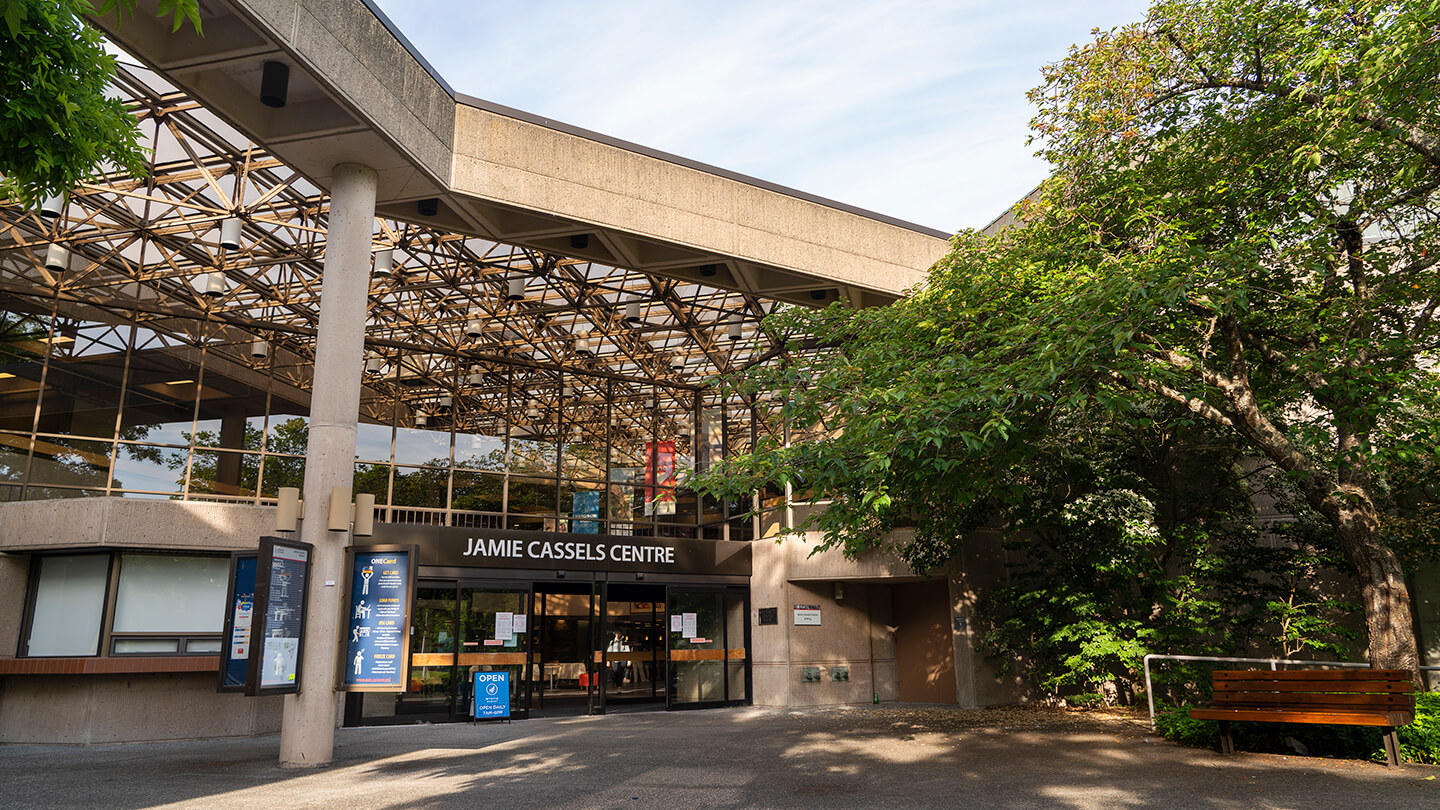
Photo via the University of Victoria.
On the docket of the final scheduled meeting of UVic Senate this term is an updated Academic Integrity Policy, which is drawing significant criticism from students and student politicians alike.
The policy, which was struck down by Senate and sent back to committee in last month’s meeting, represents a “substantial expansion and modernization of UVic’s academic
integrity framework,” according to a document submitted to Senate by the Senate Committee on Academic Standards (SCAS) on May 1.
SCAS states the proposed changes include “detailed definitions, clearer procedural steps, explicit expectations for students and instructors, and a structured penalty system.”
In many corners of the UVic community, however, key aspects of the policy — the adoption of a “more likely than not” standard of proof, the policy not explicitly banning instructors from using AI detection software, the absence of a statute of limitations, limits on the appeals process, and a potential risk for students who use certain accessibility tools — are causing alarm.
In a public statement published on May 6, the UVSS Lead Directors said the proposed changes “poses increased risk for students while weakening key protections.”
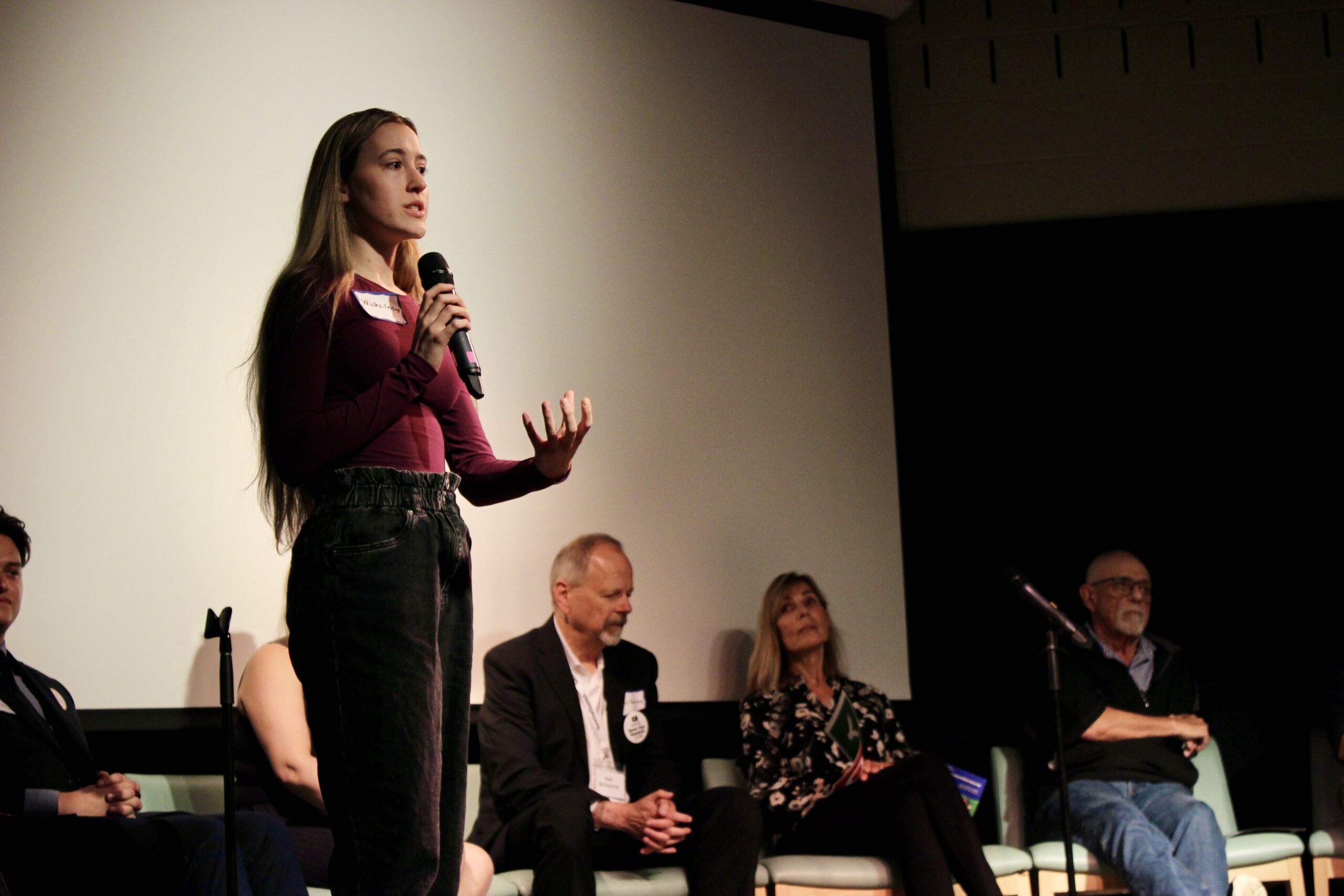
Evan Maher, a third-year engineering student who serves on UVic Senate, likewise made a lengthy post on Reddit detailing his concerns with the policy. Maher is also a Director-at-Large (DAL) on the UVSS Board of Directors, but made clear he was speaking in his capacity as a student on Senate.
The agenda for both the April 10 and May 8 Senate meetings are available online.
Standard of proof
Maher and the UVSS both criticized the policy for adopting a “more likely than not” standard of proof (i.e. a “greater than 50 per cent likelihood”).
“The burden of proof should be significantly higher when you’re looking at a permanent mark on someone’s transcript, or being permanently banned from the university,” Maher said.
Under the new policy, penalties for academic dishonesty are supposed to escalate in severity based on the seriousness of the violation, or the number of previous violations on the student’s record.
“There is some debate about whether that [standard of proof] should apply to the lesser offences, as they aren’t permanent. I’m of the opinion that it should be…. My argument behind that is that, if you have a lower burden of proof, it’s easier for students to accumulate multiple infractions, and so then, especially if the burden of proof isn’t higher later on, then it’s incredibly easy to reach five [violations].”
Currently, the standard UVic used was if “compelling information” existed to support an allegation that academic integrity was violated. It is also the responsibility of a department’s Chair to determine if “compelling information” exists.
Under the new policy, determining if it is “more likely than not” that a violation occurred is within the purview of the Instructor, falling to the Chair if the Instructor is not available or if the violation warrants a higher penalty than what an Instructor is allowed to issue (a warning, forcing the student to redo the work, assigning a grade deduction or a grade of 0 for the work).
The statement from the UVSS Lead Directors argues a standard of proof of 51 per cent “put too much responsibility on the decision maker.”
“This level of proof, combined with no explicit banning of AI detection software, leaves all students vulnerable to high levels of risk or false positives,” the statement reads.
Ban on AI detection software?
While the policy states in multiple sections that Instructors and Chairs “must not use unapproved university software, including detection tools or analytical systems, when evaluating or investigating alleged Academic Integrity violations; only university-approved tools and processes may be used in the application of this policy,” Maher suggests this opens a “silent authorization” loophole that may allow UVic “administration the power to ‘approve’ investigative software behind closed doors.”
The Martlet asked representatives of the Senate Committee on Academic Standards (SCAS) what mechanisms the university uses to approve software.
“The process and policy that our committee has spent four years crafting is, first and foremost, an effort to improve equity and fairness for students. The committee met numerous times with student senators, student leaders, interested faculty and the UVic Ombudsperson. We also sought to correct any misunderstandings of the policy that we encountered and that we think underlie some of these concerns,” reads a joint statement attributed to Professor of Psychology Dr. Danu Stinson, who serves as chair of SCAS, and Associate University Secretary Ada Saab, who also serves on the committee.
Stinson and Saab said “We will continue our efforts to inform Senators and audience members about the revised policy at the May Senate meeting.”
Both Maher and the UVSS Directors called for AI detection tools to be “explicitly banned in policy to protect our students from false reports.”
Statute of limitations
A statute of limitations is a legal term referring to the amount of time after an incident when legal proceedings, such as prosecution, may be enacted. Acts that fall outside the statute of limitations cannot be acted upon legally, even if evidence exists that the act was committed.
The proposed changes to the Academic Integrity Policy explicitly state that there is “no statute of limitation on breaches of the Academic Integrity Policy,” opening the door to academic integrity violations being discovered and penalized after a student has graduated. In the April 10 Senate meeting, a senator was told the possibility that this could happen was intentional.
According to the SCAS’ terms of reference, they already consider and make recommendations to Senate on any proposals to rescind degrees.
“The explicit expansion of including alumni under this policy leaves students open to serious harm. This means that graduated students can still be punished long after they have graduated, when they may no longer have access to materials needed to defend themselves,” the UVSS Directors said in their statement.
Though penalties under the new policy are intended to escalate in severity based on the number of violations the student has committed, Maher said he believes it’s possible alumni could still be at risk of having their degree rescinded on a first violation.
“If there was a piece of work in which the student was flagged for and under the policy, they should receive a failing grade for even that piece of work, and that results in a failing grade for the course, then they would be flagged under the policy…. I think there’s definitely room in the policy to rescind a degree on the first violation,” he said.
As Section 5.4 states Instructors may ask students to meet with them and that the student “may be asked to speak to the Work in question and demonstrate sufficient knowledge and command of the material to substantiate that they are its author,”
The Martlet had also asked representatives of SCAS how alumni would be expected to defend work that had been done after significant time had passed. The joint statement did not specifically answer this question.
Implications for students with accommodations
At the April 10 meeting, Senators raised concerns over entries in the previous policy draft regarding “copyright infringement.” Following these concerns, the draft proposed for Senate approval today has removed “copyright infringement” for “further consultation and future revision.”
The discussion arose in response to a question of whether uploading an Instructor’s course materials to Centre for Accessible Learning (CAL)-approved software would constitute copyright infringement.
The version of the policy presented for the April 10 meeting did feature one example of academic dishonesty — “Unauthorized sharing or selling of materials developed by instructors, such as instructional resources, examinations, assignments, or other course materials” — that was removed in the May 8 version.
Additionally, section 4.2.6 — Course materials and intellectual property — has been removed from the May 8 section of the policy.
However, “unauthorized sharing or selling of course materials” still appears in an academic integrity violation report form on pages 147 and 148 of the May 8 agenda.
While the section on copyright infringement has been removed, along with the entry on “unauthorized sharing or selling of materials,” and Appendix A of the policy states CAL-approved software is university-approved, both Maher and the UVSS Directors said the updated policy still does not adequately protect students with accommodations.
Appeals
The section of the policy regarding the appeal process for academic integrity violations has also been criticized for limiting what students are permitted to appeal. Section 11 of the policy, which deals with appeals, outlines to whom students may appeal a decision — Instructor to Chair, Chair to Dean, and Dean, Vice President Academic and Provost, and President to the Senate Committee on Appeals.
However, Section 11 states “appeals will focus on procedural matters, not the substance of the
academic judgement under investigation,” which Maher says prevents students from appealing based on the factual accuracy of a judgment.
“If a flawed algorithm wrongly accuses you, but the instructor filed the paperwork correctly and met the deadlines, the conviction stands. You lose the right to the truth, leaving you trapped in a “perfect” procedure that resulted in a wrong conclusion,” he said in a post on Reddit.
During the April 10 meeting, a senator asked if the policy envisions “being based on questions of fact or on a standard of reasonableness,” and was told the focus of appeals is “procedural.”
Section 5.2 of the policy states that before “attending a meeting regarding the alleged Academic Integrity violation, the Student should gather all relevant documents that may be necessary for the conversation. Normally, a decision will not be reopened unless there is new material that could not have been reasonably presented at the original meeting and would have reasonably affected the outcome.”
The section also states that “If the Student is assigned a penalty…. The Student may respond
to the Academic Integrity Incident Report in the space provided. A Student may also attach a letter in response to the Academic Integrity Incident Report.”
The Martlet asked SCAS if leaving students with little room to dispute the factual nature of cases, as Maher suggested, is the intended outcome of the policy. The joint statement did not specifically answer this question.
What comes next?
Senate will vote today whether to approve or not approve the proposed changes. If it is approved, the changes to the Academic Integrity Policy will be effective September 2026. If it is not approved, it will be the second time in two months that Senate voted against the proposed update.
The fact that the policy has been brought back to Senate so soon, Maher says, is unusual — the other contentious proposal during the April 10 meeting, replacing the Academic Writing Requirement with a Core Research and Writing Requirement, was not resubmitted for Senate approval this month.
In an interview with the Martlet, Maher questioned if members of SCAS had “sufficient time to actually review [the policy]. He publicly alleged that UVic’s administration “bypassed standard materials deadlines and expedited committee sessions to ‘ram’ a nearly identical version of the policy back through the system in record time.” The Martlet could not verify this allegation.
The Martlet reached out to SCAS for comment on the allegation, and to ask how and when the committee determined the policy was ready for resubmission to Senate. The joint statement did not specifically answer this question.
“This will be the second time this policy is being brought to the Senate to vote on, where it was originally sent back for adjustments that have not been made,” the UVSS Lead Directors said in their joint statement.
“We understand the University’s desire to have a strong Academic Integrity Policy for the beginning of the Fall term, to ensure first years, newly enrolled, and incoming students have a clear understanding of how AI can and can’t be used. However, this policy update needs to consider all students and the unintended harm it could cause,” the statement continues.
“We ask that all senators take further amendments into consideration, and listen to the voices of the students who will be impacted by these updates.”