
The other 200 students in PSYC 101 are here to learn, not to hear about your personal problems
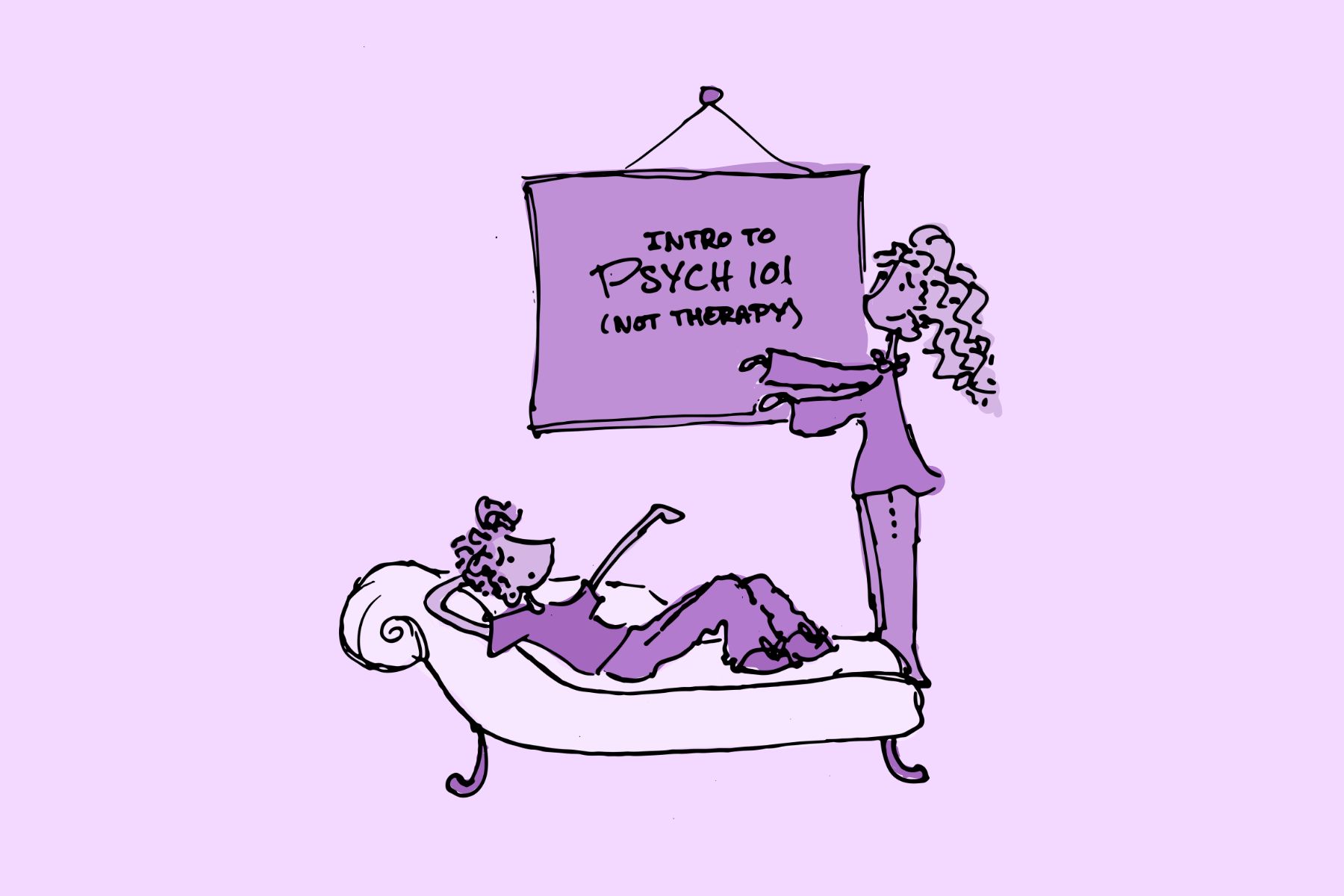
Illustration by Sage Blackwell.
About three weeks into Psychology 101, first-year psychology students develop a very specific kind of confidence. It isn’t earned, and it isn’t subtle. It’s the kind of confidence you get to discuss a complex topic at dinner after watching a few mildly related Instagram reels.
They hear a few terms — attachment style, defence mechanism — and suddenly they think they understand the entire human psyche, believing that they now comprehend human behaviour at a level that is both advanced and, unfortunately, applicable to everyone they know.
That unearned confidence spreads quickly. Conversations stop being conversations and become informal assessments. Normal observations are replaced with diagnoses.
Your boyfriend cheated on you? Well, that’s usually the behavioural expression of unresolved attachment anxiety interacting with reward-driven enforcement. Your best friend cancelled plans last minute? You know, cancelling plans is basically your unconscious defending against potential social discomfort.
Every minor inconvenience becomes evidence of something deeper, and everything deeper must be pointed out and psychoanalyzed. These students cease simply experiencing a situation; they analyze it in real time, out loud, and often without regard for people’s feelings.
Inevitably, this extends to the one person who seems most qualified to confirm all of these deep insights: the professor.
Your psychology professor isn’t your therapist. They are not a therapist-adjacent figure. They are not a budget version of a therapist included in your tuition. They are a person whose job it is to teach you psychological theories, not apply them to your personal life, while the rest of the class rolls their eyes.
Part of the issue is that many students assume proximity to expertise equals access to it. If someone can explain why you make bad decisions, surely they should have some interest in helping you stop. But this logic doesn’t apply anywhere else.
No one is asking their biology professor for medical advice, despite the fact that they clearly understand the human body. No one is emailing their economics professor for help with rent, even if they can explain why it keeps increasing.
That’s because most of us understand that knowledge of a system does not obligate someone to personally intervene in their experience of it. Psychology is the only place where these boundaries feel negotiable. News flash — they aren’t.
Don’t be the guy who puts your hand up in class to share your personal example of anxious attachment. The 200 other students in your class don’t need to hear about your family dog who died when you were six, or the love of your life who got away. I promise everyone will figure out the subject without that extra help.